
Top rated
South Korea & Japan
22 days · 21 nights
South Korea + Japan Adventure, 22 Days
4.9 (575 · Trustpilot)
Seoul to Japan
Many meals included
RRP $7699 Save $10 From
$7689 AUD
≈ $350/day
Australia
K-pop, palaces, street food, temple stays
You already know Korea's exports, the food, the music, the skincare aisle. The country itself is better: Seoul's palace-and-neon collision, soju nights that turn strangers into friends, hiking trails that start at subway stations, and Busan's beach-city cool at the end of a fast train.
2 ways to do South Korea, compare length, route and price, then pick your trip.
South Korea & Japan
22 days · 21 nights
4.9 (575 · Trustpilot)
Seoul to Japan
Many meals included
$7689 AUD
≈ $350/day
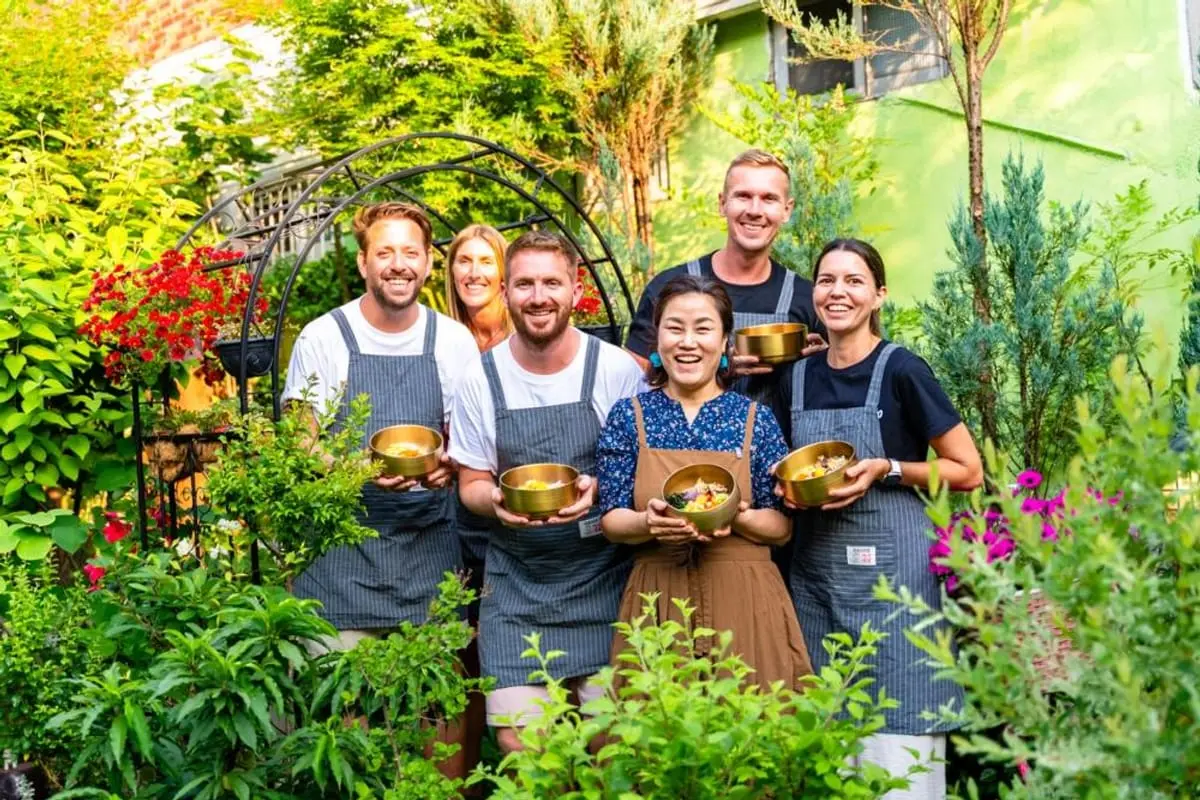
South Korea
10 days · 9 nights · Seoul loop
4.9 (575 · Trustpilot)
Many meals included
$3089 AUD
≈ $309/day
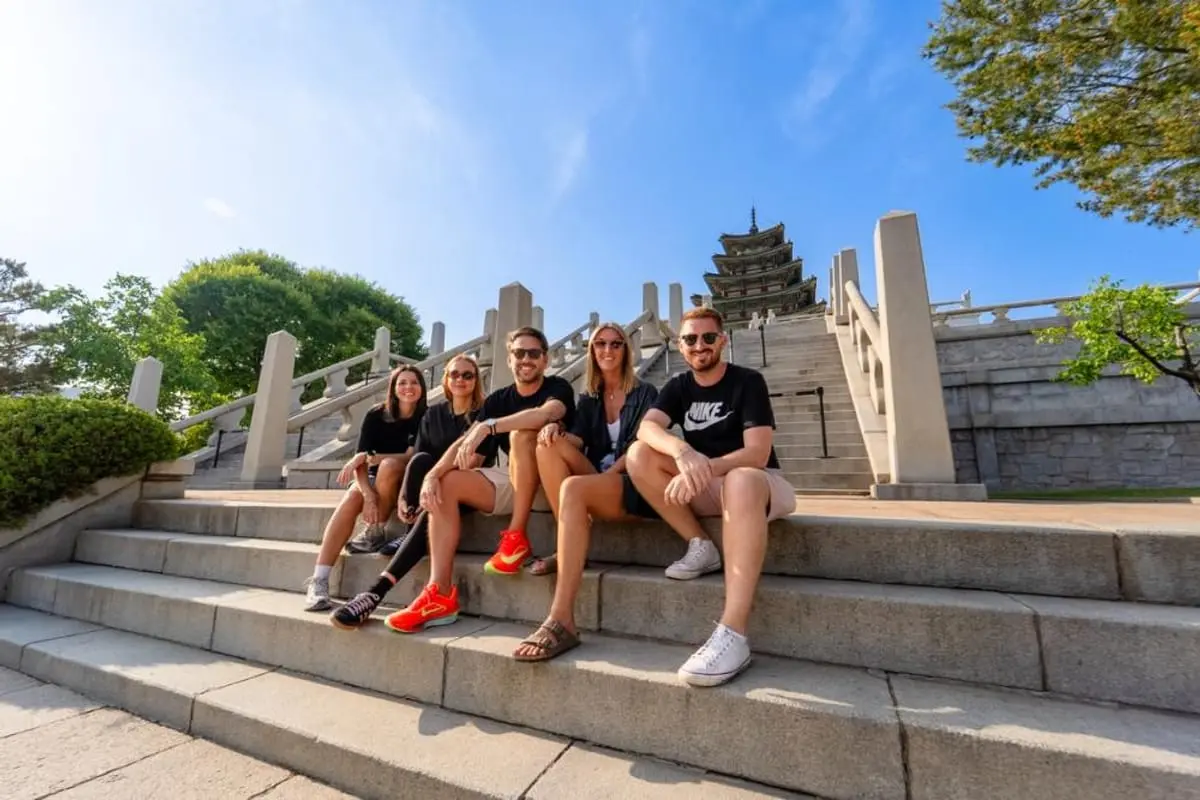
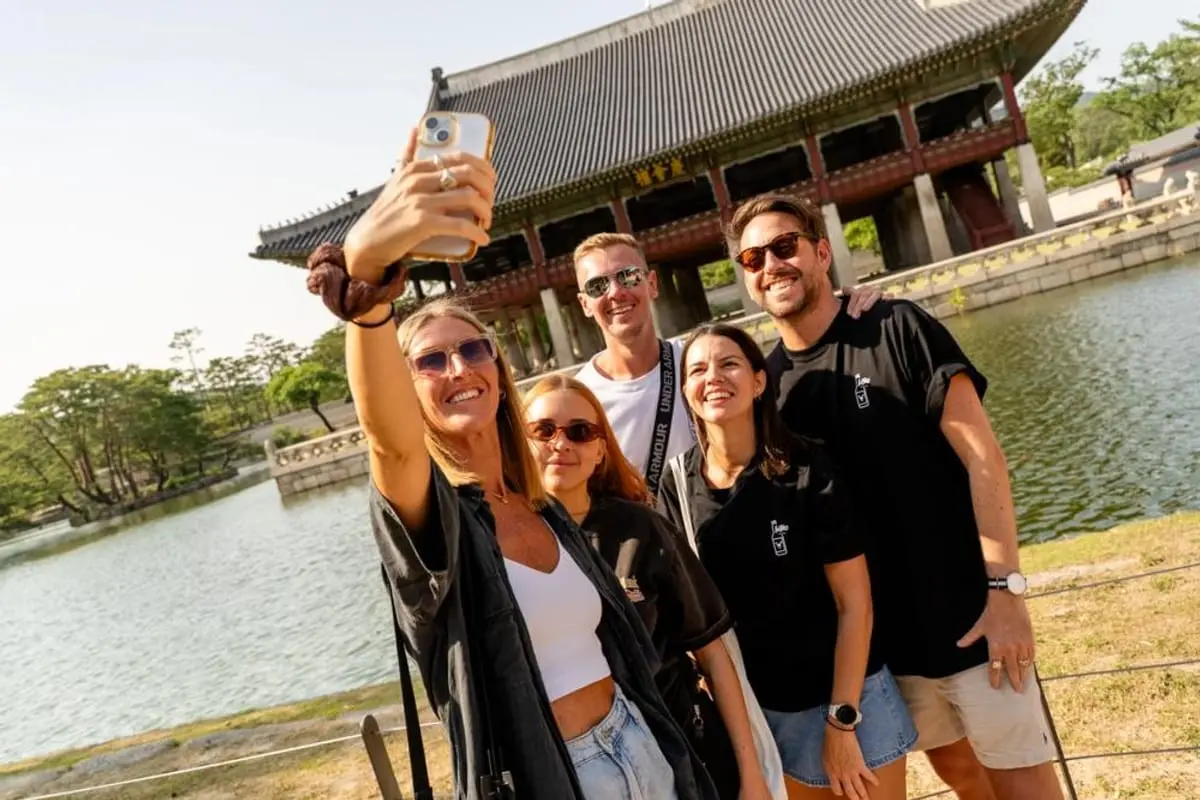
Start at Gyeongbokgung Palace at 10am for the changing of the guard, full Joseon-dynasty costume, drums, the lot, then look up and clock the skyscrapers behind it. That's Seoul in one frame. Rent a hanbok and you skip the palace entry fee, which is the most Korean deal going. Wander the hanok rooftops of Bukchon, eat tteokbokki straight from a street cart, then do the thing you actually came for: film your own K-pop video in a proper studio, choreography and all. Cringe for ten minutes, brag about it forever.
Seoul is the only capital going with a legit granite mountain range inside its city limits. Bukhansan National Park is a subway ride from your hostel, and the push up to Baegundae Peak (836m) takes around three hours return, steel cables on the last scramble, then the whole city sprawled out below you in every direction. You'll be overtaken by Korean grandparents in head-to-toe hiking gear. Let it happen. Too easy? N Seoul Tower on Namsan does the skyline at sunset with a cable car and zero sweat.
About an hour north of Seoul, the Demilitarised Zone splits the Korean peninsula in two, and yes, you can visit on a guided tour (it's the only way in). Stare into North Korea from the Dora Observatory, walk down the Third Infiltration Tunnel that the North dug under the border, and stand in a train station built for a reunification that hasn't come. It's heavy, weird and genuinely unforgettable, history that's still happening, not behind glass. Book ahead and bring your passport; they check.
Korean nights have a rhythm: round one is dinner, bibimbap or a bubbling tofu stew, banchan covering every inch of table. Round two is soju and somaek (soju bombed into beer, pace yourself, it's sneakier than it tastes). Round three is a noraebang, your own private karaoke room, until your voice gives out. Hongdae is the backpacker heartland, university crowd, street buskers, bars that don't blink at 4am. On our group trips, this is the night nobody shuts up about.
Seoul to Busan on the KTX takes around two and a half hours, and you step off in a different country: Korea's second city is a port wrapped around hills and beaches. Haeundae Beach is the famous one, about a kilometre and a half of white sand backed by high-rises, with the beach-train and sky-capsule line running along the cliffs to the east. Gamcheon Culture Village stacks pastel-painted houses up a hillside, built by Korean War refugees and now covered in murals, cafés and staircases that all lead to a better view. Haedong Yonggungsa is the temple that breaks Korea's rules: instead of a mountain it sits on the rocks above the sea on the city's north-east coast, best at sunrise before the tour buses. Finish at the bars behind Gwangalli Beach, where the Gwangan Bridge lights up across the bay.
The Templestay programme lets you sleep in a working Buddhist temple: grey robes, a 108-bow prostration, meditation with a monk, a bell before dawn and a silent vegetarian meal served in the traditional wooden bowls. It's the single best reset on a party-heavy trip and the night everyone talks about afterwards; our 10-day trip builds one in on day seven. From there it's a short hop to Gyeongju, capital of the Silla kingdom for almost a thousand years and known as the museum without walls: grassy royal burial mounds right in town, the Bulguksa temple and Seokguram grotto on the hill above it (both UNESCO-listed), and a hanok village where you sleep on a heated floor. Day eight of the South Korea Adventure, 10 Days is spent here.
Fly into Incheon International Airport, Seoul's main hub, with direct flights from Sydney and Brisbane of roughly ten and a half hours and one-stop options from every other capital. The AREX express train runs from Incheon Terminal 1 to Seoul Station in about 43 minutes. Check Korea's current entry requirements for your passport before you fly; they change, and the K-ETA electronic travel authorisation is the thing to search for.
In Seoul, buy a T-money card at any convenience store: it works on the subway, buses and taxis nationwide, and the base subway fare for the first 10 kilometres is 1,550 won. Between cities, the KTX high-speed train is the move (Seoul to Busan in around two and a half hours), with intercity buses as the cheaper, slower backup. Two things to download before you land: Naver Map, because Google Maps barely works in Korea, and Papago for translation. Our group trips include all in-country transport, so the only logistics you handle are the ones you choose to.
Days 1 to 3, Seoul: Gyeongbokgung and the Bukchon hanoks on day one, Hongdae that night; the DMZ on day two (guided tour, booked ahead, passport in hand); Bukhansan or N Seoul Tower and a K-pop video shoot on day three. Day 4: KTX out of the capital for a cooking class and a rice wine tasting in the countryside. Day 5: the coast, and a Korean dinner night with the group. Day 6: a taekwondo class, because when else. Day 7: temple stay, early bells, total silence. Day 8: Gyeongju's royal tombs and hanok village. Days 9 to 10: back to Seoul for the markets, the bathhouse and one last noraebang. That is, stop for stop, how the South Korea Adventure, 10 Days runs, from $3,089, with the beds, transport and every activity already booked and a leader meeting you at the airport. Got three weeks? The 22-day version, from $7,689, flies on to Tokyo on day ten and keeps going through Mt Fuji, Osaka and Kyoto.
Korea costs less than Australia and less than Japan. Subway rides start at 1,550 won with a T-money card, street food and convenience-store meals are a few dollars, and Seoul's hostels are good value by Australian standards. The expensive line items are the ones our trips bundle: the KTX, the temple stay, the DMZ tour, the K-pop studio and the coastal nights. The South Korea Adventure, 10 Days, from $3,089, covers nine nights of accommodation, many meals, all in-country transport, a group leader from airport pickup and every activity on the itinerary, with no pay-on-arrival extras. The South Korea + Japan Adventure, 22 Days, from $7,689, does the same for both countries, including the flight between them. Bring spending money for nights out, shopping and the meals that aren't included.
Spring (March–May) and autumn (September–November) are the sweet spots, mild days, low rain, and the country showing off: cherry blossoms in early April, fire-red foliage from mid-October. Summer is hot, humid and has a proper monsoon season in July; winter is dry but seriously cold, though it's great if you're keen to ski cheap.
Ten days is the sweet spot for a first trip: Seoul (palaces, DMZ, nightlife), the KTX out to the coast, a temple stay and Gyeongju. That's exactly how our South Korea Adventure, 10 Days runs, from $3,089. Got longer? The 22-day South Korea + Japan Adventure, from $7,689, knocks both countries off in one hit.
It costs less than Australia and less than Japan. Street food and market meals run a few dollars, the subway is fast and costs next to nothing with a T-money card, and hostels in Seoul are solid value. Two hacks: convenience store meals are genuinely good, and a jjimjilbang (Korean bathhouse) doubles as the world's cheapest overnight stay.
Do the Seoul one-two: Gyeongbokgung Palace by day, Hongdae by night, with a street-food feed in between. Then book the DMZ tour, nowhere else on Earth offers anything like it. If you want the story nobody back home has, add an overnight Buddhist temple stay: 4am bells, monk-led meditation, total silence. Bizarrely good for the hangover.
Fly into Incheon International Airport (ICN), Seoul's main hub: direct flights from Sydney and Brisbane take roughly ten and a half hours, and there are one-stop options from every Australian capital. From Incheon, the AREX express train gets you to Seoul Station in about 43 minutes. Check the current entry requirements for your passport, including the K-ETA electronic travel authorisation, before you fly.
One of the best. It's extremely safe, you'll see locals leave laptops unattended in cafés, the subway has English signage everywhere, and the hostel scene in Seoul and Busan is sociable. One heads-up: Google Maps barely works in Korea, so download Naver Map. Or skip the faff entirely and join a small group, the freedom of solo, the crew of a group.
Early April brings cherry blossoms, Seoul's Yeouido park and the Jinhae festival near Busan go all-out. Mid-October to early November is autumn foliage season, with Seoraksan National Park turning first and Seoul's palaces following. Winter means skiing in Gangwon province, and summer brings beach season at Busan's Haeundae. Whatever the month, the food never has an off-season.
The DMZ is the headliner, about an hour north, guided tours only, book ahead. Beyond that: Suwon's Hwaseong Fortress, a UNESCO-listed 18th-century wall you can walk in a couple of hours; Nami Island for tree-lined paths and K-drama filming spots; and Bukhansan National Park for a proper summit hike. All are reachable by public transport for a few dollars.
No. The Demilitarised Zone is a military area and civilians only enter on an authorised guided tour, booked ahead with your passport details. Tours leave Seoul in the morning and take most of the day, covering the Third Infiltration Tunnel, the Dora Observatory and Dorasan Station. The DMZ day is built into our South Korea Adventure, 10 Days on day three.
No. Seoul's subway, trains and major signage are in English, menus in tourist areas usually have pictures or English, and Papago translates the rest in real time. Learn a few words (annyeonghaseyo for hello, kamsahamnida for thank you) and you'll get warm smiles. On our group trips the leader handles anything trickier.
A Korean bathhouse: hot and cold pools, saunas of different temperatures, sleeping rooms and a snack bar, open 24 hours and used by whole families. You get a uniform of shorts and a T-shirt for the shared areas; the pools are single-sex and swimwear-free. They're cheap, spotless, and the classic backpacker move is to sleep in one for a night.
Take the KTX for the long hops: Seoul to Busan is around two and a half hours by high-speed train against four or more by bus. Intercity buses are cheaper and run everywhere the train doesn't, so they suit shorter legs and small towns. Our trips include all in-country transport, so you never buy a ticket.
Two weeks instead of one? Add a side-trip? We'll build it for free.