
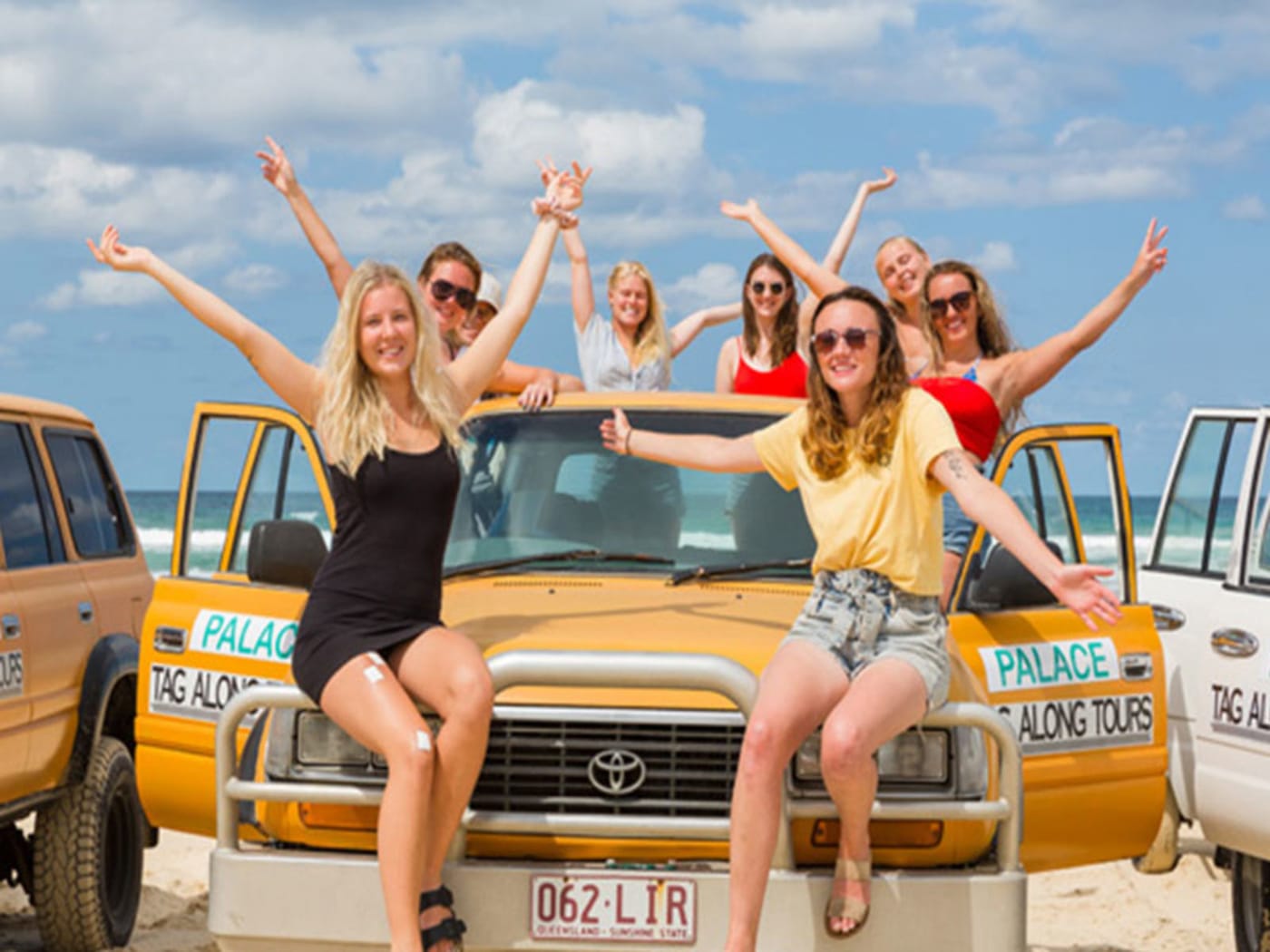


Short answer: a K’gari tag-along is a 4WD convoy trip where you take turns driving your own vehicle behind a lead car with a guide, who picks the route, knows the tides and sorts the food and camp. Most run two or three days, camping or in a beach house. You need a full driver’s licence to drive, and plenty of people happily ride as passengers.
A K’gari tag-along is the trip where you drive. Not a bus, not a guide at the wheel: you and a few people you met yesterday in a 4WD, following a lead vehicle along a beach that doubles as a highway. It’s the East Coast’s most hands-on tour and the one people talk about for the rest of their trip. Here’s what it’s really like, so you can decide if it’s your kind of thing and which version to book.
What is a tag-along tour, exactly?
K’gari (still called Fraser Island by a lot of people) is the largest sand island in the world. There are no sealed roads. Everything, including the main “road”, is sand, and the tracks through the middle are soft, rutted and only passable in a proper 4WD.
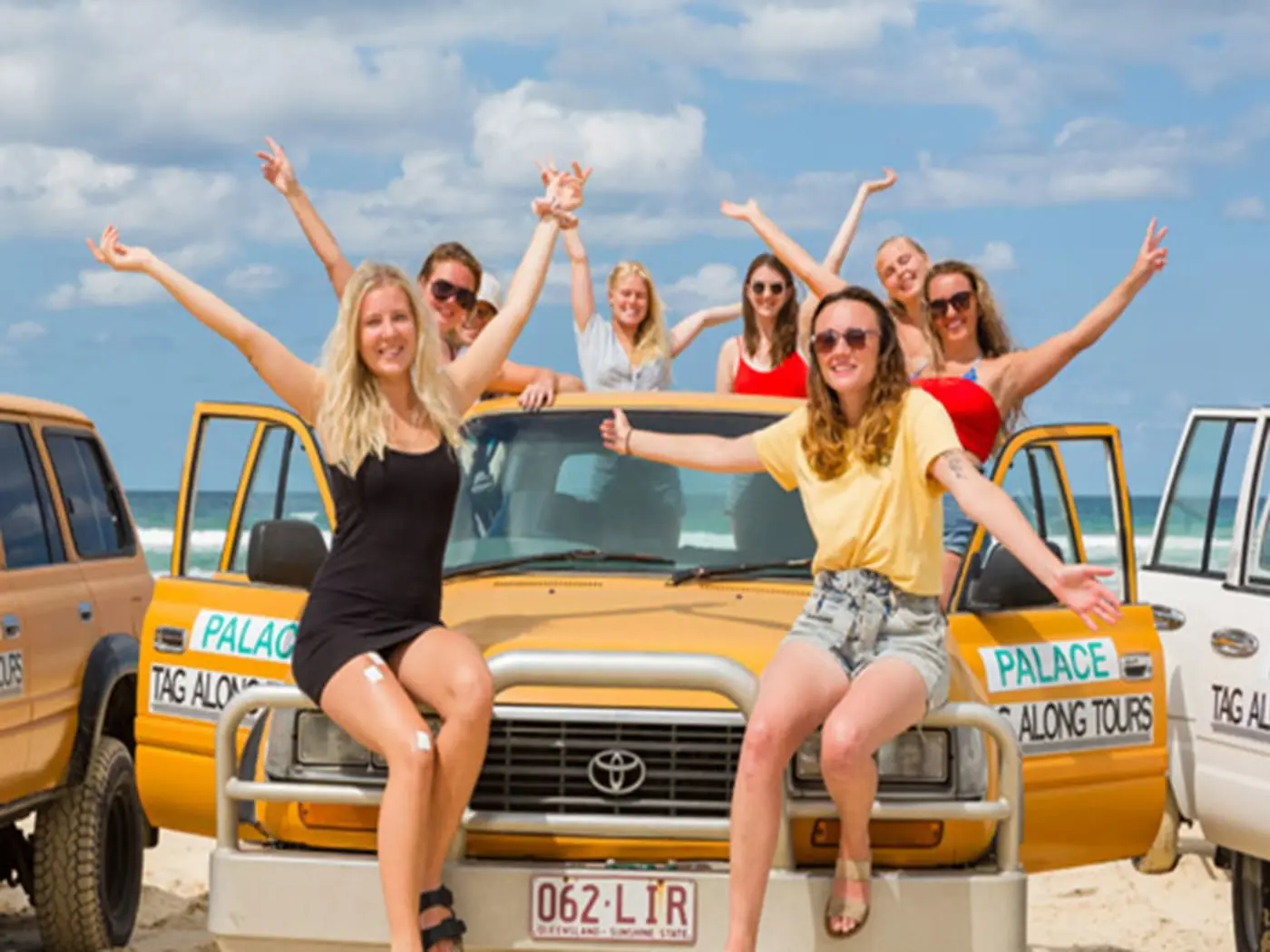
On a tag-along, the operator supplies a convoy of 4WDs, usually with a handful of travellers per vehicle, plus a lead car with a guide. The guide drives the front vehicle and talks to the convoy by radio. You take turns driving yours. The guide picks the route, knows the tides, cooks or organises the food, and sorts the camp. You get the fun bit without the responsibility of planning it.
You need a full driver’s licence, not a learner’s or provisional licence, to be eligible to drive on most tag-alongs. If you don’t want to drive at all, that’s fine too. Plenty of people in the convoy are happy passengers for the whole trip.
What a 3-day tag-along looks like, day by day
Operators vary the order depending on tides and where they’re camped, but the shape is the same.
Day one: barge, beach, first swim
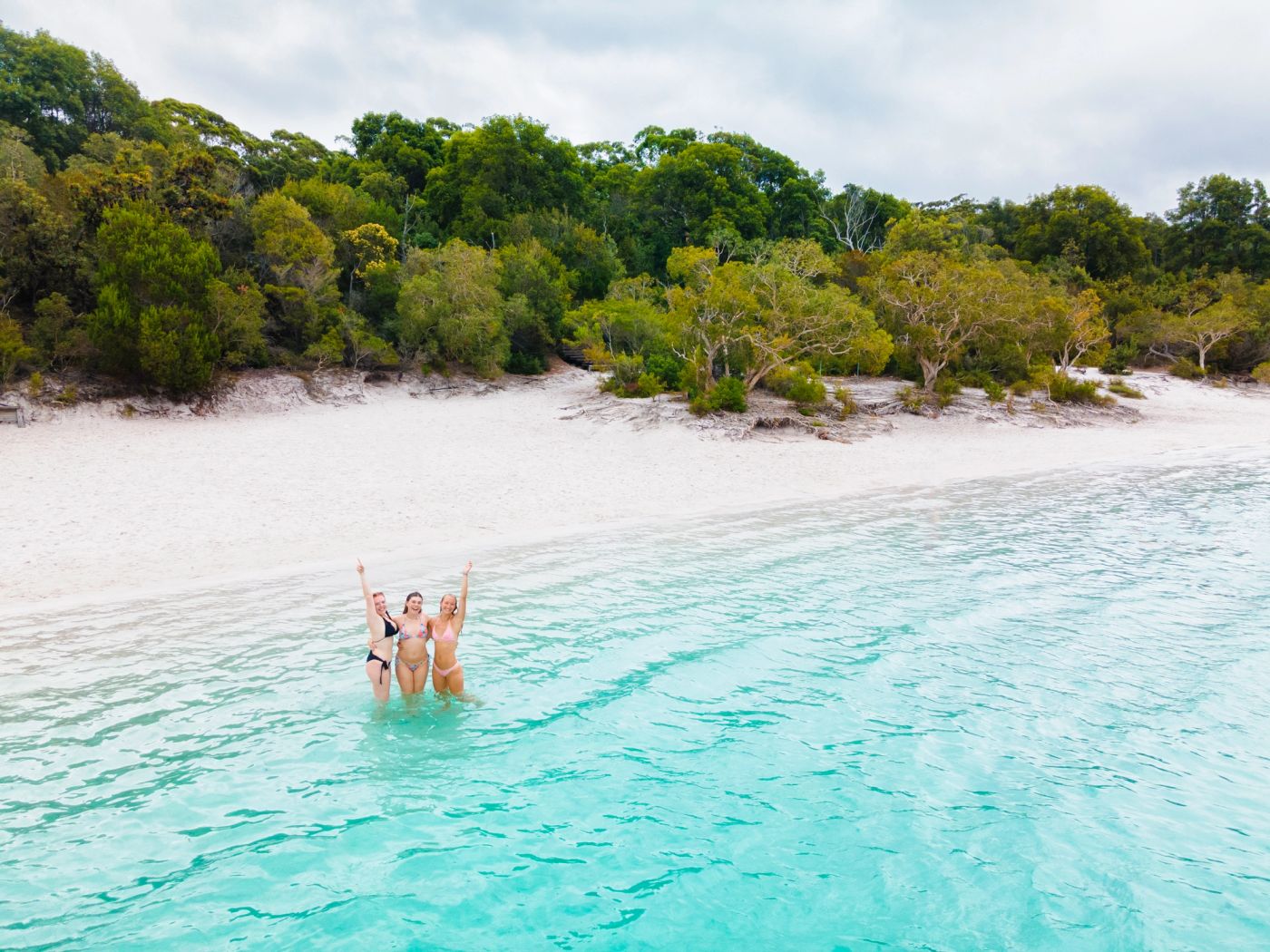
You meet early at the departure point, get a safety briefing on sand driving, load the vehicles and roll onto the barge. The crossing is short. Then the first proper drive: along the inland track to the eastern side, or straight onto 75 Mile Beach depending on your start point. First stop is often Lake McKenzie, a perched freshwater lake with white silica sand and water so clear it looks fake. Afternoon is a central-island rainforest walk, then into camp to set up before dark.
Day two: 75 Mile Beach, the long one
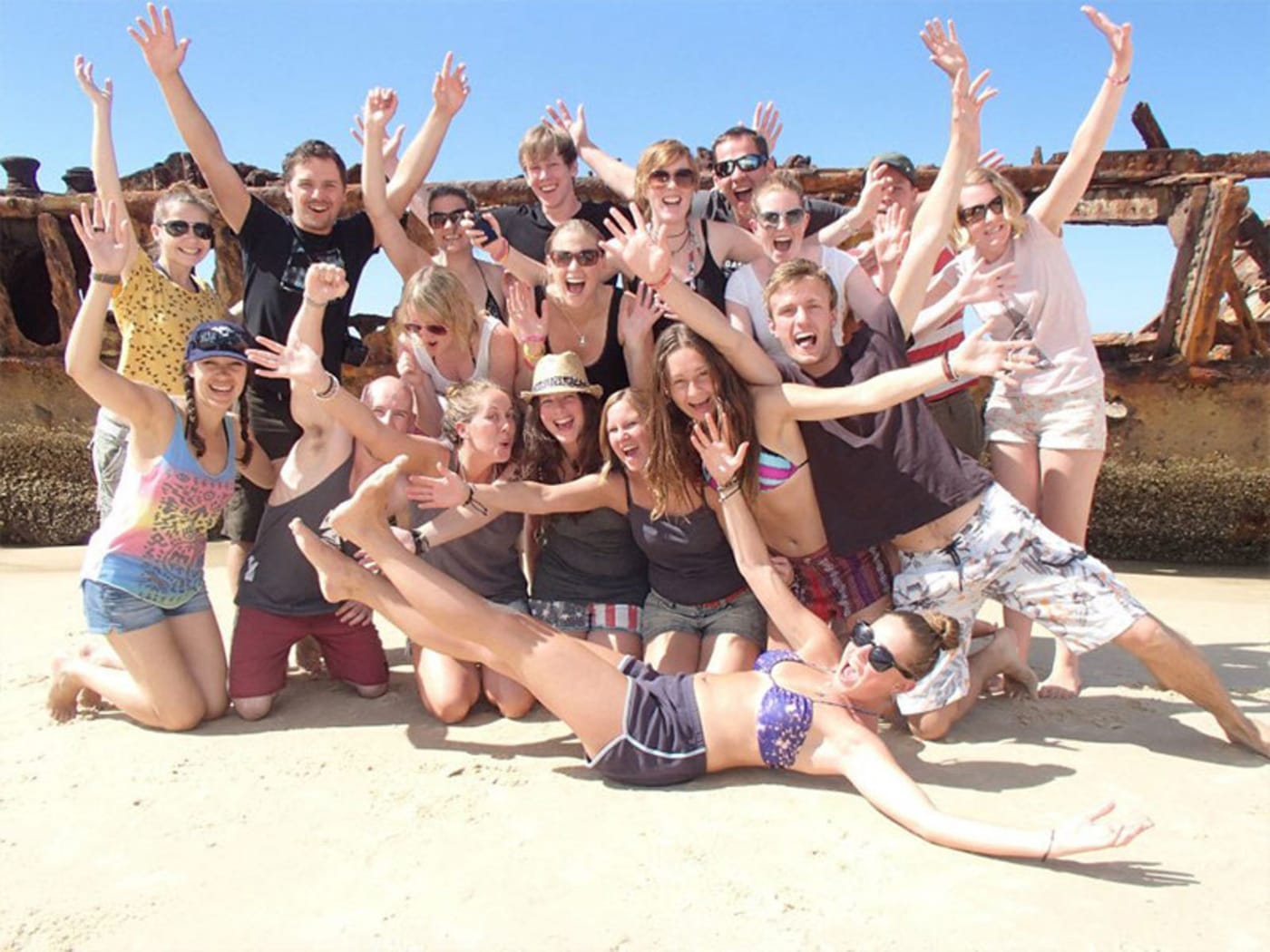
This is the big beach-driving day. 75 Mile Beach runs most of the length of the island’s east coast and it’s where you’ll do your longest stretches at the wheel. Stops include the Maheno shipwreck rusting into the sand, the Pinnacles coloured sand cliffs, Eli Creek (you float down it, then walk back up and go again), and the Champagne Pools, natural rock pools that fill with foaming surf at high tide. Indian Head headland is the lookout: from the top you can often spot sharks, rays, turtles and, in season, whales. Swimming in the ocean off K’gari is not a thing. Strong currents and a healthy shark population mean you swim in the lakes and creeks, and the pools, only.
Day three: a lake, a creek, the barge home
A morning at Lake Wabby (a deep green lake at the bottom of a huge sand blow) or Lake Birrabeen, pack up camp, a last drive and the barge back. You’re off the island by mid-afternoon.
Driving on sand: honest tips
- Soft sand is where people get stuck. Keep momentum, don’t brake hard, don’t make sharp turns. If you feel the wheels start to dig, ease off and let the car find traction rather than flooring it.
- The beach is a gazetted road with a speed limit and normal road rules. Give way, indicate, and watch for planes landing on the sand near Eurong.
- Tides decide everything. The beach is only driveable for a window either side of low tide. Your guide plans the day around it, which is the main reason a tag-along beats self-drive for first-timers.
- Inland tracks are slow, bumpy and narrow. Expect 15 to 30 km/h and a lot of bouncing.
- Dingoes are wild and this is their island. Don’t feed them, don’t leave food out, don’t walk alone at dusk, and keep your distance. Your guide will brief you properly.
Camping vs real beds: which K’gari tour to book
This is the real fork in the road.
Camping
Classic tag-alongs camp in dome tents at a beach campsite behind the dunes. You help set up, meals are cooked on a camp stove or BBQ, and nights are spent around the fire pit (where fires are permitted) under an absurd amount of stars. It’s basic, social and cheap. The Dingo’s K’gari 3-Day 4WD Tag-Along from Rainbow Beach is from $579 and the K’gari 3-Day Tag-Along Safari from Noosa or Rainbow Beach is from $599.
Real beds
Some tag-alongs swap the tent for a beach house with shared rooms and proper bathrooms. You still drive, still do the full island, you just sleep better. Worth the step up if you’re over 25, travelling as a couple, or you’ve already done a week of hostel dorms and want a night’s sleep. The K’gari PINK 4WD Tag-Along, 2 Days from Hervey Bay is from $649.
Rainbow Beach, Noosa or Hervey Bay: where to start
Rainbow Beach is the classic backpacker departure point. It’s the closest town to the Inskip Point barge, so you spend less time in transit and more on the island. Most tag-alongs are based here, including both 3-day tag-alongs above and the guided K’gari (Fraser Island) 3-Day Adventure from Rainbow Beach, from $599.
Noosa works if you’re coming up from Brisbane and don’t want to detour. Several operators run pick-ups from Noosa and drive you to the barge. Both 3-day safaris linked above depart from Noosa or Rainbow Beach, your choice.
Hervey Bay sits opposite the island’s west coast and is the whale-watching capital (roughly July to October). If you’re basing yourself there, the K’gari PINK 4WD Tag-Along, 2 Days from Hervey Bay is from $649 and gives you the driving experience in two days instead of three.
Tag-along vs day tour vs self-drive hire
Day tour. A guide drives a big 4WD bus-truck and you see the highlights in one long day: Lake McKenzie, 75 Mile Beach, the Maheno, Eli Creek. You don’t drive and you don’t stay. Best if you’ve got one day or you’re not keen on camping. The K’gari Day Tour (Rainbow to Rainbow) is from $279.
Tag-along. You drive, someone else plans. Two or three days, camp or a beach house, a built-in crew of people. This is the best balance of adventure and not-stuffing-it-up for first-timers, and it’s where most 18 to 30s land.
Self-drive hire. You rent a 4WD, book your own permits and camping, and go. Total freedom and the best option if you already know sand driving and have a group of four or five to split the cost. It’s not cheaper per person unless the car is full, and recovery if you get bogged is on you. K’gari 4WD Hire, 3 Days is priced per vehicle and quoted on enquiry.
What to pack for a K’gari tag-along
- A small soft bag, not your full pack.
- Reef-safe sunscreen, hat, sunglasses, a rashie for lake swims.
- Towel, swimmers, thongs plus closed shoes for the rainforest walks.
- One warm layer and a rain jacket. Nights can be cool.
- Insect repellent, a head torch, a power bank. Reception is patchy.
- Your driver’s licence if you want to drive, and a card for the bond.
- Snacks and drinks are usually sorted by the operator, but BYO for a couple of beers at camp is normal. Check the trip page for the limit.
FAQs
Do you need 4WD experience for a K’gari tag-along?
No. The sand-driving briefing covers it and your guide is on the radio the whole time. Having a full licence is the requirement, not experience. If you’d rather not drive, you don’t have to.
Can you swim in the ocean on K’gari?
No. Strong currents and sharks make the surf beach unsafe for swimming. You swim in the freshwater lakes, Eli Creek and the Champagne Pools instead, and the lakes are the better swim anyway.
Is 2 days or 3 days better on K’gari?
Three days lets you see the whole island without rushing and gives you two nights at camp. Two days still covers the headline spots and suits a tight East Coast schedule. If you can spare the extra day, take it.
When is the best time to visit K’gari?
It’s a year-round island. Winter (June to August) brings cool nights and whale season nearby in Hervey Bay. Summer is hot and humid with more rain. Spring and autumn are the easy middle. Check the operator’s page for departure days, most run several times a week.
See every K’gari tour side by side on the K’gari (Fraser Island) page.
Tagged