


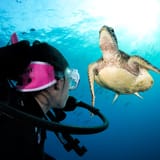
Short answer: the Great Barrier Reef is a good place to learn to dive, and the PADI Open Water course (theory, pool skills and four open water dives) qualifies you to dive to 18 metres with a buddy for life. The Cairns classic is the 5-day course with liveaboard, from $1,199: two days in town, then three days and two nights on the outer reef. Sort the dive medical questionnaire before you arrive.
If you’re going to learn to dive anywhere, learn on the Great Barrier Reef. Cairns is one of the busiest dive-training towns on the planet for a reason: warm water most of the year, outer reef sites a few hours offshore, and liveaboard boats built around getting beginners certified without rushing them. Here’s what the course involves, how the medical paperwork works, and what to do with your new card.
What a PADI Open Water course involves
PADI Open Water is the standard entry-level certification. Pass it and you’re qualified to dive to 18 metres with a buddy, anywhere in the world, for life. The course has three parts, and every school runs them in the same order:
- Theory. How pressure affects your body, how to read a dive computer, what the hand signals mean, how to plan a dive. Most schools now push this to eLearning you do before you arrive, which frees up more time in the water.
- Confined water. Pool sessions where you learn the skills: clearing a flooded mask, recovering a lost regulator, controlling your buoyancy, sharing air with a buddy. It feels awkward on day one and automatic by day two.
- Open water dives. Four dives on the reef where you repeat those skills in the real thing, then go for a swim with turtles. Pass all four and you’re certified.
You’ll also do a swim test before any of it: a 200 metre swim and a 10 minute float or tread. No stopwatch, no style points, just proof you’re comfortable in water deeper than you are.
Learning on a liveaboard vs day boats
Some courses do the open water dives on day boats, heading out and back each day. The liveaboard version loads you onto a boat for the dive days and keeps you out on the outer reef, which means more dives, better sites, and no three-hour commute between you and the coral.
The PADI Open Water Course, 5 Days with Liveaboard, from $1,199, is the Cairns classic. Two days of classroom and pool in town, then three days and two nights living on the outer reef with nine dives in total: your four certification dives first, then fun dives for the rest of the trip, including a night dive. You finish the course already diving like someone who’s been doing it for a while, because by dive nine, you have.
Five days is a chunk of a backpacking budget and a chunk of your time. Spend it. The people who regret their course are the ones who did the cheapest version somewhere with murky water and spent the whole thing stressed. Nobody regrets learning on the reef.
The dive medical questionnaire
Before you can get in the pool, you’ll fill in a dive medical questionnaire. It’s a standard form asking about things like asthma, ear and sinus problems, heart conditions, recent surgery and certain medications. Answer it honestly. If everything is a “no”, you sign and go. If anything gets flagged, you’ll need a doctor to assess you and sign you off before the school will let you start, and Cairns dive schools take this seriously.
Practical advice: sort it before you arrive. If you know there’s something on your history that might come up, see a doctor at home or book a dive medical in Cairns a day or two before your course starts (schools can point you to local dive doctors). Turning up on course morning with a flagged form and no sign-off means a lost day at best. That’s all we’ll say on it; what counts as fit to dive is a conversation for you and a doctor, not a travel blog.
What else to know before you book
Flying. Don’t book a flight the morning after your last dive. The standard guidance is to wait at least 18 hours after multiple dives, and most operators tell you 24 to be safe. Build a buffer day into your Cairns plans.
Seasickness. The outer reef crossing can be lumpy. If you’re prone to it, take tablets before you leave the marina, not when you start feeling green.
Stinger season. From roughly November to May, marine stingers are around in tropical north Queensland. Boats supply stinger suits (a full-body lycra layer), which you’ll be wearing anyway for sun protection.
Contact lenses. Fine to dive in. Glasses aren’t; prescription mask lenses exist but you won’t need them for the course.
Not sure yet? Try a dive before committing. The All-Inclusive Outer Reef Day Trip from Cairns, from $279, includes a free introductory scuba dive (medical permitting) alongside snorkelling and a full day’s food. If breathing underwater turns out not to be your thing, you’ve found out for the price of a great reef day rather than a five-day course.
Certified already? Where to dive next
If you’ve got your card, Cairns is where you fill the logbook. The outer reef liveaboards are built for exactly this.
The Certified Dive Adventure 2D/1N (4 Day Dives, 1 Night Dives), from $789, is the short version: two days, one night, five dives including your first night dive if you haven’t done one. The night dive alone is worth it. Everything is different after dark, and the reef’s hunters come out.
The Certified Dive Adventure 3D/2N (7 Day Dives, 2 Night Dives), from $1,129, is the serious logbook filler: up to nine dives across the outer reef over three days, two of them at night, with all meals, gear and reef levies included.
The OceanQuest 2 Night Liveaboard, from $949 keeps you on the outer reef for three days diving Norman, Saxon and Hastings reefs, with air-conditioned en-suite cabins and a “Sharks in the Dark” night session. A comfortable step up from a dorm bunk and a reward for having sat through the theory.
Cod Hole and the Ribbon Reefs
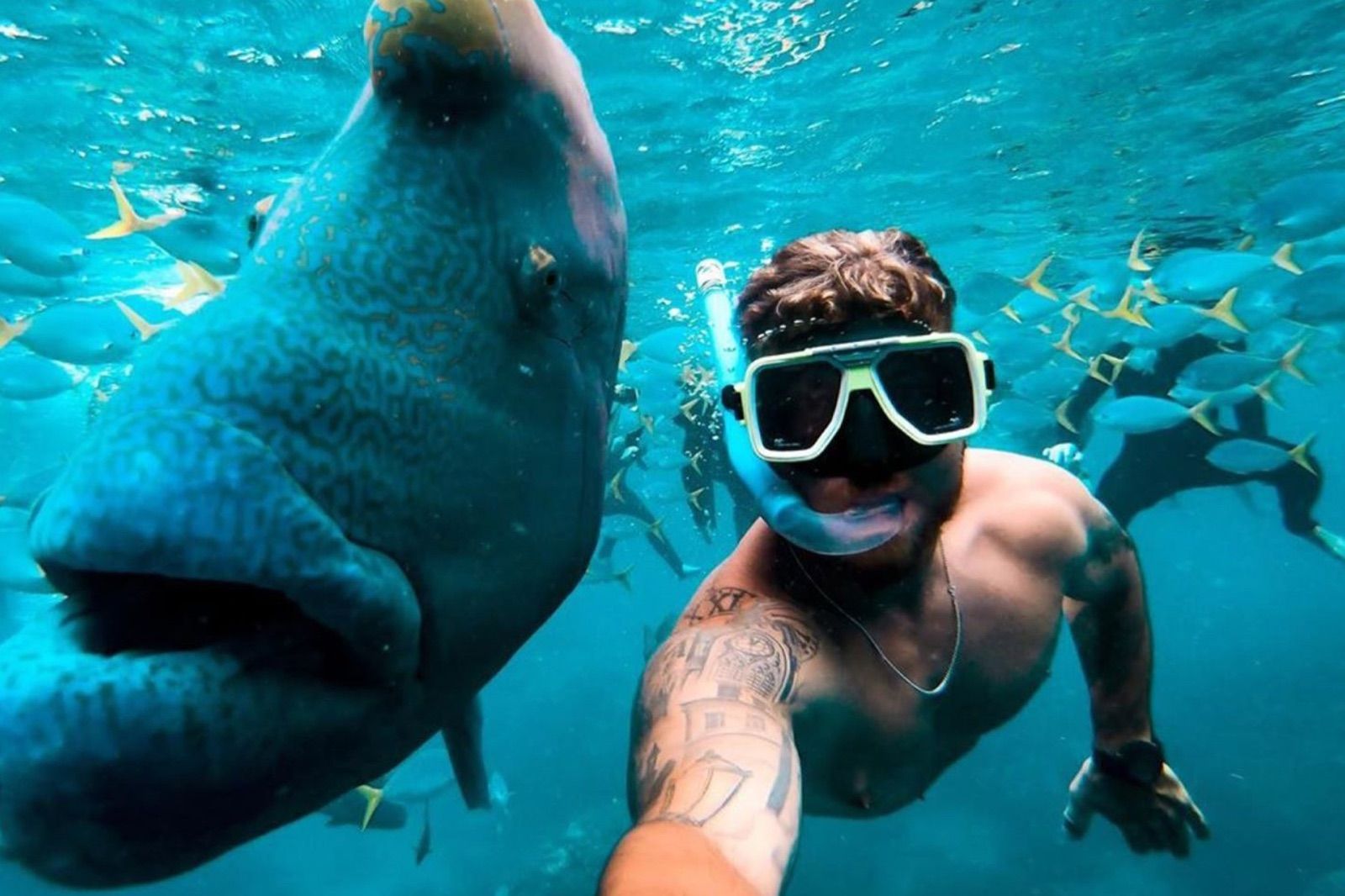
This is the one divers talk about in hushed tones. The Ribbon Reefs run along the outer edge of the reef far north of Cairns, past Port Douglas, and because they’re a long way from anywhere they see a fraction of the boat traffic. The coral is dense and healthy, the visibility is often the best on the reef, and the Cod Hole is home to a resident family of giant potato cod, fish the size of a labrador that swim right up to divers because they’ve been doing it for decades.
The Cod Hole & Ribbon Reef 3 Night Liveaboard, from $2,399, gives you three nights up there with up to 11 dives. Its price reflects the distance, the dive count and the sites. If you’re going to do one big-ticket dive trip in Australia, this is it. June and July add the chance of dwarf minke whales, which turn up in these waters for a few weeks each winter and are curious enough to come and look at you.
You need to be certified to join it. Do the Open Water course first, get a few dives in your logbook on the day boats, then come back for this one.
Is learning to dive worth it for a backpacker?
Honestly, yes, if you’re planning to spend any more time near warm water. A certification is a one-off cost that opens up Thailand, the Philippines, Indonesia, Fiji and everywhere else backpackers end up, and the reef is the best classroom going.
Only in Cairns for two days? Snorkel and do the intro dive. Got five? Do the course. Already got the card? Pick a liveaboard and go.
Browse everything on the Great Barrier Reef page, or see what else is on around Cairns and Tropical North Queensland while you’re waiting out your no-fly window.
FAQs
How long does it take to get PADI Open Water certified?
Three to five days depending on the school. The five-day liveaboard course in Cairns uses two days for theory and pool work and three for diving, which is more water time than a shorter course gives you.
Do I need to be a strong swimmer to learn to dive?
You need to pass a 200 metre swim and a 10 minute float, neither of which is timed. Comfortable in deep water is the bar, not fast.
What is the dive medical form?
A standard questionnaire about your health history that every student fills in before the course. If any answer is flagged, a doctor has to sign you off before you can start, so check it early and sort any sign-off before course day.
Can I dive the Cod Hole as a new diver?
You need a certification to join the Ribbon Reef liveaboards. Finish your Open Water course, log a few dives on the outer reef day boats or a certified liveaboard, and you’ll be comfortable enough to get the most out of it.
Tagged