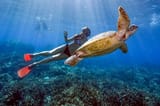
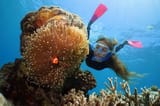

Short answer: the Great Barrier Reef in summer (December to February) is warm, wet and still open. Cairns averages a 31.8°C maximum and 419mm of rain in December, with January close behind, the water sits around 29°C, and it is stinger season, so you snorkel in a suit the boat supplies. Visibility near the coast drops after heavy rain because of river run-off; the outer reef, well offshore on the edge of the continental shelf, is far less affected, which is why the outer-reef boats and pontoons are the summer picks. Trips cancel for wind and swell a few days a month at the height of the wet, not for rain. Outer reef days start from $269.
Prices are per person in AUD and update from our live listings.
Summer on the reef, by the numbers
| December | January | February | |
|---|---|---|---|
| Cairns mean maximum | 31.8°C | 31.5°C | similar, with the year’s heaviest rain in Jan to Feb |
| Cairns mean rainfall | 419mm | 405mm | the wettest stretch of the year |
| Water temperature | around 29°C in summer | ||
| Stingers | Season, suits on | Season, suits on | Season, suits on |
| Cyclone season | 1 Nov to 30 Apr, most activity Jan to Mar |
Those are Bureau of Meteorology long-term averages for Cairns. Port Douglas and Airlie Beach follow the same pattern. The rain mostly comes as afternoon and overnight storms rather than all-day drizzle, so a reef day that leaves at 8am often gets a dry morning on the water. The month-by-month picture for the whole coast is in a separate guide; this one is summer only.
Visibility: where you go matters more than when
Wet-season rain washes sediment out of the rivers and into the coastal water. That reduces visibility near the mainland and around the inshore islands and cays for a few days after a big downpour. The outer reef sits on the edge of the continental shelf, well away from the river mouths, and is the least affected: on a normal summer day the outer sites are still clear enough for a full snorkel and dive day, and on the best days the difference from winter is small.
So the summer rule is: go outer.
- Outer reef day boats from Cairns and Port Douglas run to two or three outer sites a day. The Full Day Outer Great Barrier Reef Tour is $269; the All-Inclusive Outer Reef Day Trip from Cairns is $279; from Port Douglas the Outer Reef Snorkel & Dive Cruise is $309.
- Pontoons are moored on the outer reef and give you a fixed platform with a sheltered swim area, which helps on a choppy summer day and for nervous swimmers. The Outer Reef Pontoon Snorkel Day from Cairns is $319, the Moore Reef Pontoon Day Tour is $299, and the Agincourt Reef Pontoon Snorkel Day from Port Douglas is $329.
- Liveaboards spend the whole trip on the outer reef and dive it at dawn and at night. The OceanQuest 2 Night Liveaboard is $949; the PADI Open Water Course, 5 Days with Liveaboard, $1,199, is the learn-to-dive option. The learn to dive guide explains the course.
Inner-reef trips to Green Island or the Low Isles still run and are still good days out, especially in a calm spell; just know they are the ones most affected by a big rain in the days before. Cairns vs Port Douglas vs Airlie Beach compares the three bases, and Great Barrier Reef tours by price sorts every trip we sell cheapest first.
Stinger season on the reef
Queensland’s marine stinger season typically runs from November to the end of May. The two stingers that matter are the box jellyfish and the much smaller Irukandji. The box jellyfish is a coastal animal and the serious risk is at the beaches, which is why the tropical towns swim in netted enclosures and lagoons from November to May. Irukandji can turn up further out, so every reef boat issues stinger suits in the season and you wear one for every swim.
A stinger suit is a thin full-body lycra suit over your swimmers. It is not a wetsuit, it does not keep you warm, and it is the single best piece of sun protection on a boat in summer, which is the other reason crews want you in one. Vinegar is the first aid for tropical stings and the boats carry it.
On land, swim at the Cairns Esplanade Lagoon (free, saltwater, patrolled), the Airlie Beach Lagoon, or inside the stinger nets at the patrolled beaches, and nowhere else.
What cancels in summer
Rain does not cancel a reef trip. A strong wind warning or a tropical low does, because the crossing to the outer reef is open water and the boats will not run it in big swell. At the peak of the wet, that can mean a few cancellation days in a month; in a calm spell, none. The operator makes the call, usually the evening before or at the wharf, and moves you to the next departure or refunds under their own terms, which are shown on the tour page and at checkout.
Plan for it:
- Do the reef early in your Cairns stay, not the day before your flight.
- Keep a spare day. If the boat is cancelled, the Tully River rafting day, $239, is the classic wet-season plan B, because the river is at its best after rain. The Kuranda Scenic Railway and Skyrail day, $209, runs in any weather. Cairns day trips by price lists the rest.
- Book a date, not a week. The calendar on each tour page shows the departures with seats, checked live.
Why summer still works
- The water is at its warmest, around 29°C, so an hour in the water in a lycra suit is comfortable.
- Coral spawning. The reef’s annual mass spawning happens over a few nights after the full moon, between late October and December depending on the year and the site. Liveaboards and night dives in late spring and early summer are the way to see it; it is not something a day boat can promise.
- Fewer people in the weeks either side of Christmas. The Christmas and New Year week is the busiest on the water; early December and from mid-January onwards are quieter than the dry-season school holidays.
- It is the only reef most working-holiday travellers get. If your East Coast run lands in Cairns in January, go. The reef is not closed and the outer sites are good.
If your dates are open and you want the clearest water and calmest seas, June to October is the dry season and the best window. The full reef guide and what the reef costs cover the rest of the year.
Picking a summer reef trip
| You want | Book | From |
|---|---|---|
| The best visibility on a summer day | Outer reef day boat | $269 |
| A sheltered platform if it’s choppy | Outer reef pontoon | $299 |
| Dawn and night dives on the outer reef | 2-night liveaboard | $949 |
| To learn to dive | 5-day PADI Open Water with liveaboard | $1,199 |
| A cheaper, shorter reef morning from the Daintree | Cape Tribulation reef snorkel | $199 |
Reef and liveaboard trips can carry a reef levy or fuel charge paid on the day; the tour page lists what is extra.
FAQs
Is the Great Barrier Reef worth visiting in summer?
Yes. It is wet season and stinger season, so expect heat, humidity, afternoon storms and a stinger suit for every swim. The water is around 29°C, the outer reef keeps good visibility, and the boats run with occasional wind cancellations. Book an outer reef trip and keep a spare day.
Is visibility bad on the Great Barrier Reef in the wet season?
Near the coast, yes, for a few days after heavy rain, because of river run-off. The outer reef is far less affected and is the right choice from December to February. Pontoons and outer reef day boats both go there.
Do you need a stinger suit on the Great Barrier Reef in December?
Yes. Stinger season runs roughly November to May and every reef boat issues suits in that window. It is a thin lycra suit worn over swimmers and doubles as sun protection.
Do Great Barrier Reef trips get cancelled in January?
Sometimes, for strong wind or a tropical low rather than rain; a few days a month at the peak of the wet, none in a calm spell. The operator moves you to the next departure or refunds under their terms. Do the reef early in your stay.
What is the water temperature on the reef in summer?
Around 29°C from December to February, the warmest of the year.
When does coral spawning happen on the Great Barrier Reef?
Over a few nights after a full moon between late October and December, varying by year and site. Liveaboards and night dives are the way to see it; day trips cannot promise it.
Can you swim at the beach in Cairns in summer?
Only inside stinger nets at patrolled beaches or at the free Cairns Esplanade Lagoon. The open beaches are off limits in stinger season. Reef snorkelling from a boat in a suit is fine.
How much does a summer reef trip cost?
Same as any other month; our prices do not change by season. Outer reef day boats from $269, pontoons from $299, the 2-night liveaboard at $949. Every trip is on Great Barrier Reef tours by price.
Tagged