
Short answer: pack a 50 to 65 litre backpack with no wheels, plus a foldable 15 to 20 litre daypack, and take less than you think. The core kit is two pairs of swimmers, a rashie, reef-safe SPF 50+ sunscreen, a head torch, a dry bag, a padlock and a Type I power adapter. Winter adds warm layers for Sydney and Byron, where nights drop to single digits.
Every East Coast packing list on the internet is written by someone who has never carried their own bag up three flights of hostel stairs in Airlie Beach in February. This one isn’t. The short version: pack less than you think, buy the cheap stuff here, and get the few bits of specialist kit right, because the boat, the sand island and the reef each have their own rules.
Bag size: 50 to 65 litres, no wheels
A 50 to 65 litre backpack is the right size. Bigger and you’ll fill it; smaller and you’ll be wearing wet boardies to dinner. Wheels are useless on sand, gangways and dorm floors, and hard suitcases are a problem for a reason covered below. Add a 15 to 20 litre daypack that folds flat for day tours and bus seats, and keep the things you need on a bus (jumper, charger, snacks, headphones) in it. You’ll do at least one overnight bus on this route and you don’t want to be digging through the hold bag at 2am.
The all-season core kit
This goes in regardless of when you travel:
- Swimmers, two pairs. One is always wet.
- Rashie or long-sleeve swim top. UV on this coast is extreme most of the year. A rashie saves your shoulders on every snorkel, surf and sail.
- Reef-safe sunscreen, SPF 50+. The reef operators ask for it and the regular stuff washes off onto coral.
- Hat, sunglasses, thongs (flip-flops, if you’re not from here) and one pair of closed shoes you can walk in.
- Microfibre towel. Dries in an hour, packs to nothing.
- Head torch. Essential on K’gari, handy on boats, and the only polite way to find your bunk after midnight in a dorm.
- Dry bag, 10 to 20 litres. Phone, wallet and passport stay dry on boats and 4WD beach runs.
- Padlock. Hostel lockers rarely come with one.
- Power adapter. Australia uses the Type I plug (angled flat pins) at 230V. One adapter plus a small power board with USB ports makes you popular in a dorm with two sockets.
- Reusable water bottle. Tap water is drinkable the whole way up the coast.
- Basic first-aid. Plasters, blister pads, antihistamines, seasickness tablets, any prescription medication with a copy of the script.
- A light jumper or hoodie. Buses and boats run their air-con cold enough that you will want sleeves.
Clothes-wise: five or six tops, two or three bottoms, one going-out outfit, underwear for a week, a rain jacket. Hostels have laundries. Nobody is tracking your outfits.
Packing by season
Summer (December to February)
Hot everywhere, with the tropical north in its wet season: humid, heavy afternoon storms, the odd cyclone warning. Pack light, breathable clothes and a proper rain jacket (not a flimsy poncho), and accept that your bag will smell faintly of damp for a month. Stinger season is in full swing in the north; more on that below.
Autumn and spring (March to May, September to November)
The sweet spots. Warm days, cooler nights in New South Wales, and the north drying out (autumn) or warming up (spring). Add a light jacket for evenings in Sydney and Byron and you’re sorted. In April and May, stingers are still around in the far north.
Winter (June to August)
The bit that catches people out. Cairns in July is warm, dry and perfect, mid-20s most days. Sydney and Byron in July are not; nights drop to single digits and you’ll want jeans, a proper jacket, socks and a beanie. Doing the full Sydney to Cairns run in winter means packing for two climates. Shove the warm layers to the bottom of the bag once you cross into Queensland.
Specific kit for the Whitsundays sail
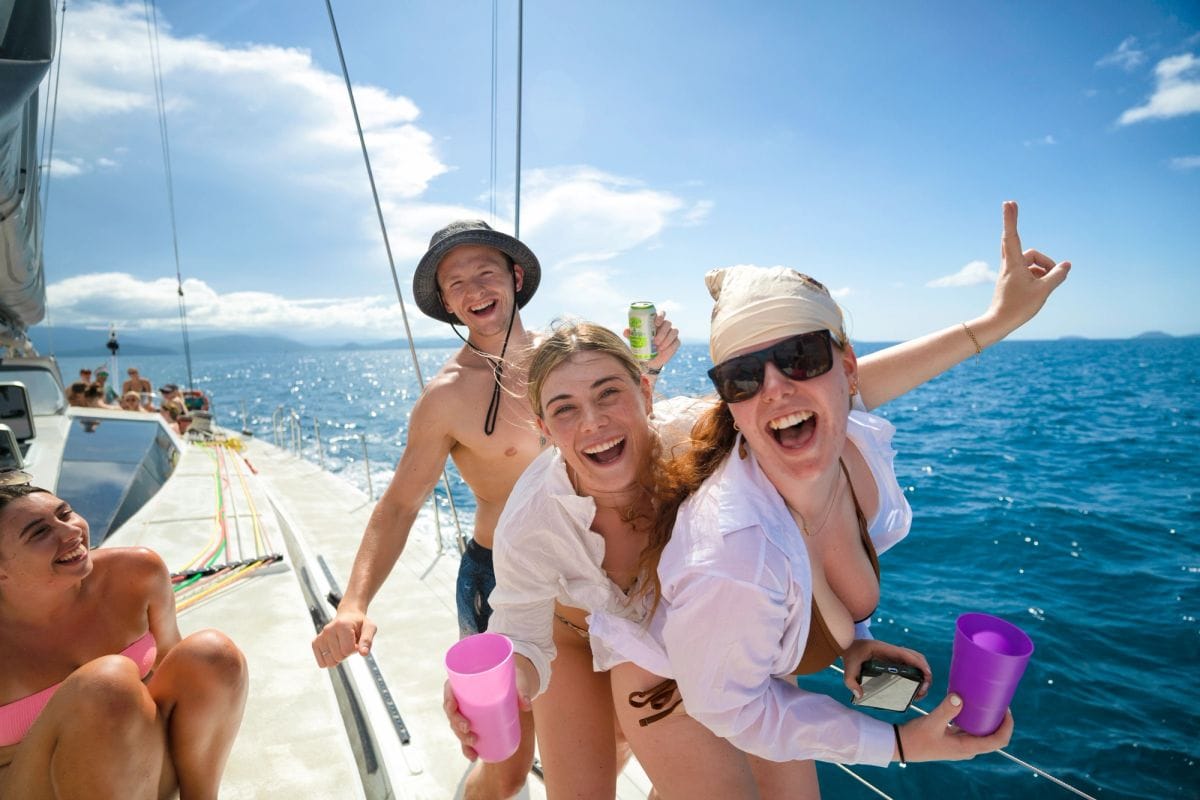
The boats have one firm rule: soft bags only. No hard suitcases, no big framed packs. Pack a small overnight bag (your daypack works) and leave your main pack in hostel storage in Airlie Beach; the hostels are used to it. On a boat like the Atlantic Clipper, from $689 meals and snorkel gear are included, so your overnight bag is swimmers, a rashie, a towel, sunscreen, a jumper, a charger and a dry bag.
Drinks are BYO on most boats, cans only, no glass; buy in Airlie before you board. Seasickness tablets go in before you leave the marina, not after. Download a playlist; signal between the islands is patchy and that’s part of the point.
Specific kit for K’gari
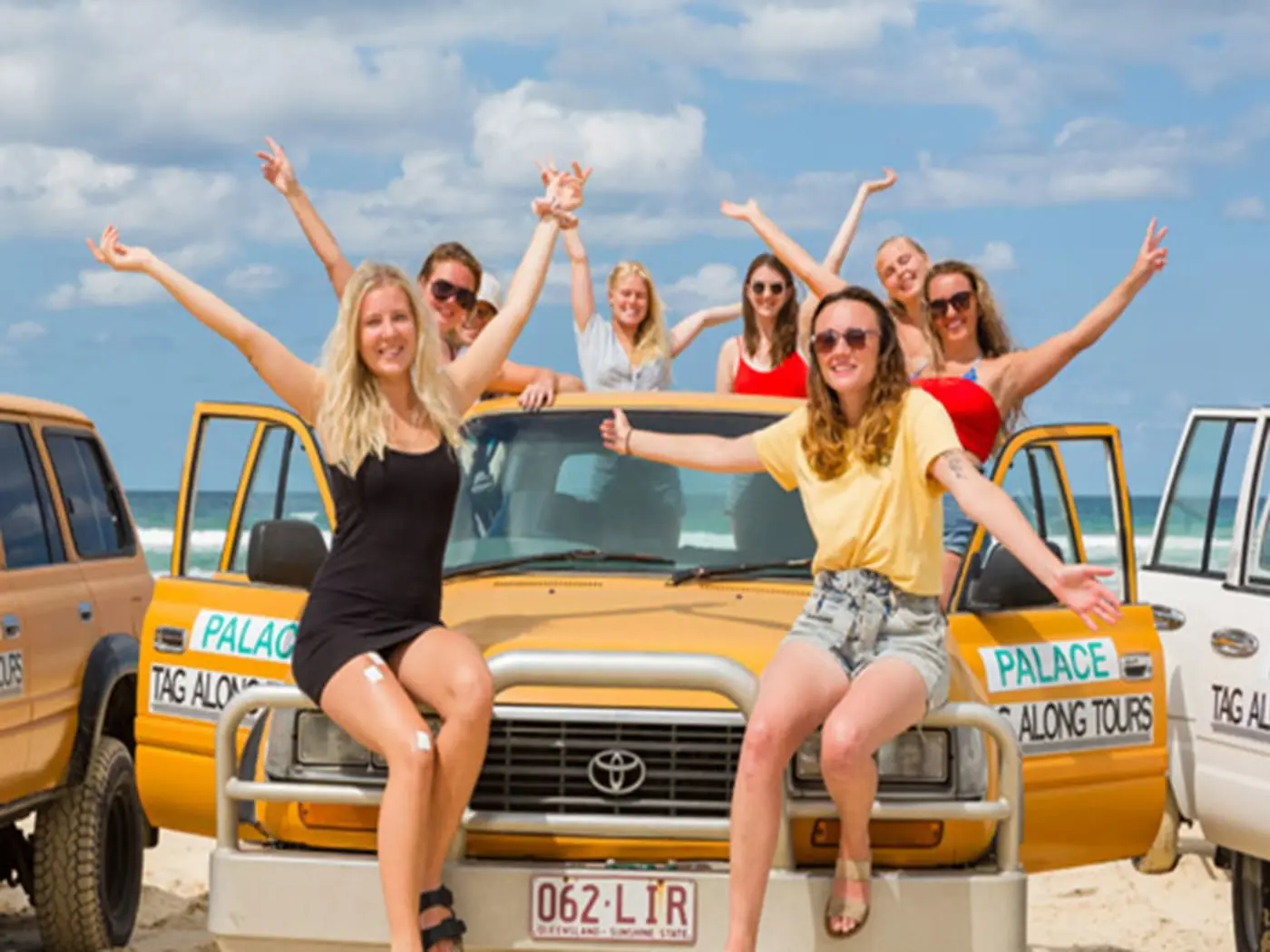
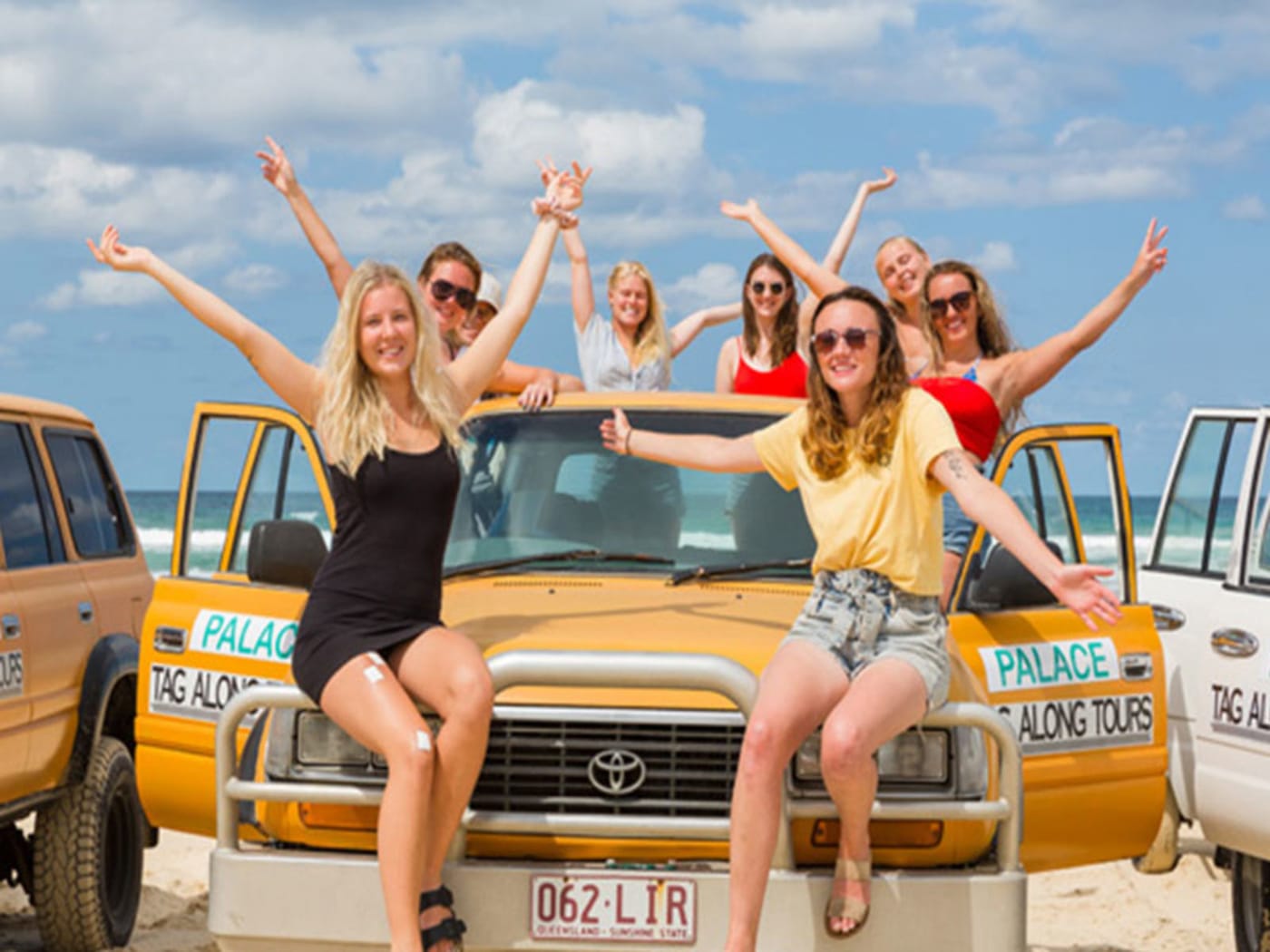
K’gari is sand, sun and camping, so the list shifts. Tag-along tours like the K’gari 3-Day Tag-Along Safari from Noosa or Rainbow Beach, from $599, supply the camping gear and meals; you’ll usually need to bring or hire a sleeping bag, so check the kit list when you book. Beyond that:
- Head torch. The camp has no street lights and you’ll be holding a plate.
- Closed shoes for the walk to Lake Wabby over the sandblow; the sand gets hot enough to hurt.
- Insect repellent. Sandflies and mozzies are around at dusk.
- A warm layer. Beach nights get cool even in summer; in winter you’ll want a fleece around the fire.
- Cans, not bottles, if you’re drinking.
One K’gari-specific rule: dingoes. The island’s population is genuinely wild. Never leave food out, never feed them, keep snacks sealed in the vehicle or the locked food boxes, and don’t wander off alone at dusk. Your guide will brief you; listen.
Specific kit for the Great Barrier Reef
Reef day boats are the easiest to pack for because most of it is supplied. On a trip like the All-Inclusive Outer Reef Day Trip from Cairns, from $279, snorkel and dive gear, meals and reef levies are all covered. You bring swimmers, a towel, sunscreen and a change of clothes for the ride home.
Stinger suits are supplied. From roughly November to May, marine stingers (including the small, hard-to-spot Irukandji) are around in tropical north Queensland, and reef and sailing operators hand out full-body lycra stinger suits. You don’t need to buy one. You do need to wear it, and it doubles as total sun protection.
Contact lenses are fine under a snorkel mask. If you own a mask that fits, bring it; a leaky hire mask is the most common thing that ruins a reef day. Seasickness tablets again, taken early.
What NOT to bring
- A hard suitcase. Won’t go on the boat, useless on sand, hated in dorms.
- A hairdryer or straightener. Humidity wins.
- More than two pairs of shoes. Thongs and one pair of closed shoes.
- A full-size beach towel. Microfibre.
- Full-size toiletries. Every coastal town has a supermarket and a Kmart or Big W where anything you forgot costs less than the excess baggage.
- A tent, stove or sleeping mat. Every tour that camps supplies the gear.
- Expensive jewellery or a laptop you’d cry about. Dorm lockers are a deterrent, not a vault.
- A sleeping bag for hostels. Linen is included, and many Australian hostels ban sleeping bags in dorms for bed-bug reasons. If a K’gari tour needs one, hire it from them.
- Three pairs of jeans. One, for Sydney in winter.
If you’d rather someone else did the planning
The packing list is the easy part; sequencing the tours and buses is where people lose a weekend. The East Coast Australia: 14-Day Semi-Guided Adventure, from $2,599, is a set Brisbane to Cairns itinerary with the bookings done for you: K’gari tag-along, Whitsundays sail, reef day and a Noosa surf lesson, plus the bus pass and every night’s bed, with a flexible start date and guides on the big days. You travel solo and pick up a crew as you go, and it runs even if you’re the only booking on your dates. Pack the bag above and turn up.
Start at the East Coast Australia hub, or jump to the Whitsundays page if the boat is the bit you’re packing for.
FAQs
What size backpack do I need for the East Coast?
50 to 65 litres, plus a small foldable daypack. Soft, no wheels. The daypack doubles as your overnight bag on the Whitsundays boat.
Do I need to bring a stinger suit for the Great Barrier Reef?
No. Reef and sailing operators supply them during stinger season (roughly November to May). Bring a rashie for sun protection outside those months.
Do I need a sleeping bag for East Coast Australia?
Not for hostels, which supply linen and often ban sleeping bags in dorms. K’gari camping tours usually ask you to bring or hire one; hiring from the operator is the easy answer.
Is it cold on the East Coast in winter?
In Sydney and Byron Bay, yes: single-digit nights from June to August, so pack a proper jacket. Cairns in the same months is warm and dry. Doing the whole coast in winter means packing for both.
Tagged