




Short answer: you do not swim at Cairns beaches, you swim in the free Esplanade Lagoon, and you do not need a car because reef, rainforest and adventure tours collect from town. Cape Tribulation is about 140 km and 2.5 to 3 hours north of Cairns, the road is sealed all the way (including across the Daintree River by cable ferry), and you only need a 4WD if you carry on north on the Bloomfield Track. Plan three to five days in Cairns, and go May to October if you can, because December to March is hot, humid and wet.
Facts below were checked on 27 October 2026 against the Daintree Ferry website, Queensland Government stinger information and operator pages, linked in the text. Fares, hours and rules change, so confirm before you travel.
Questions: swimming and safety
Can you swim in Cairns?
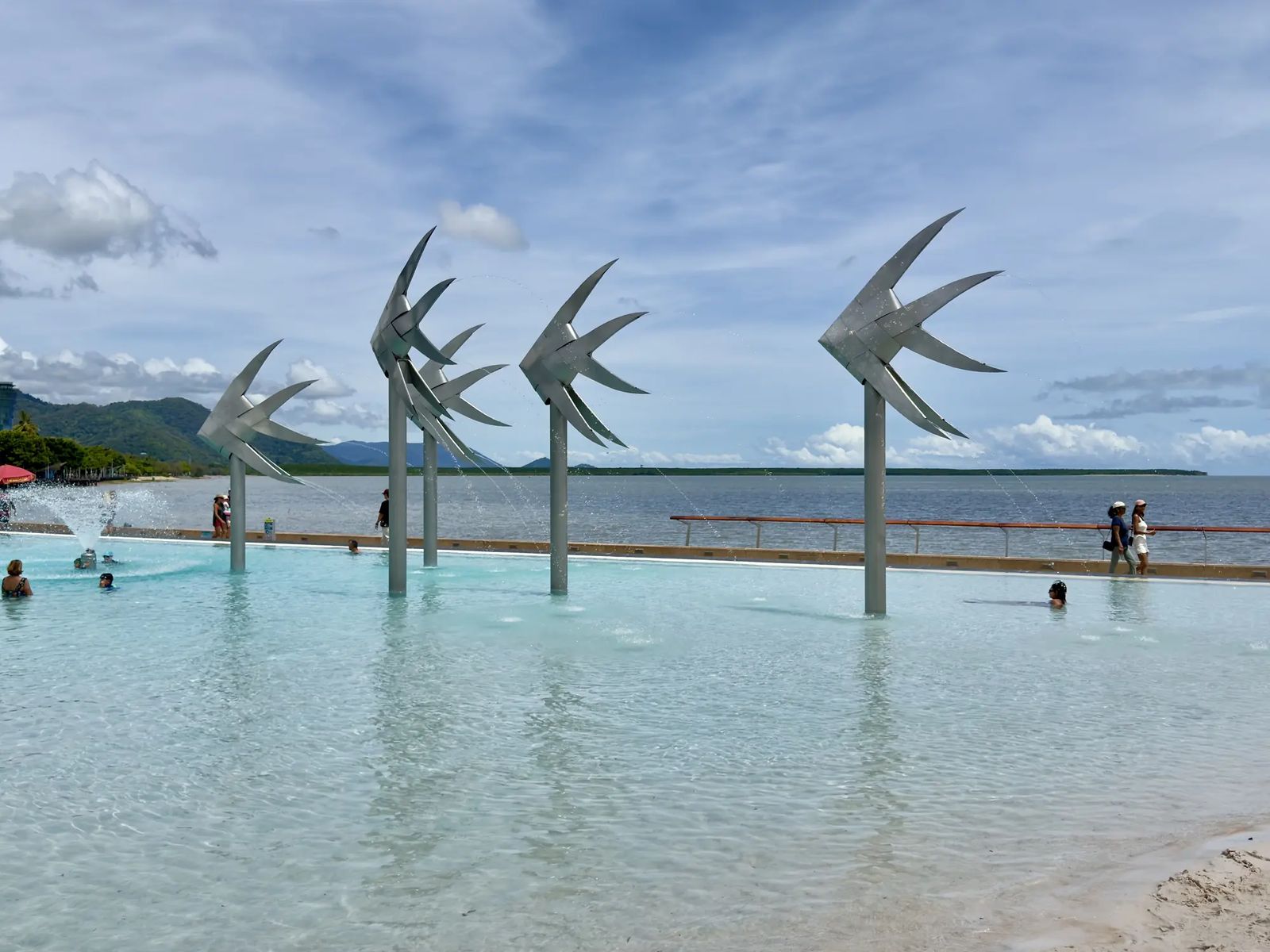
Yes, but not at the city waterfront. The Cairns Esplanade has no swimmable beach, because swimming off the natural foreshore is not allowed, given crocodiles and marine stingers. Instead you swim in the Esplanade Lagoon, a free public saltwater pool with lifeguards (opening hours vary by day, so check the Cairns Regional Council listing). For a proper beach, go to the northern beaches such as Palm Cove or Trinity Beach, where stinger nets are set in the warmer months.
Are there crocodiles in Cairns?
Yes. Saltwater crocodiles live in the rivers, creeks and mangrove estuaries around Cairns and up the coast, and they can turn up on beaches too. Obey every warning sign, stay out of the water and well back from the edge in river and creek areas, and never swim where the sign says not to. The Esplanade Lagoon, the netted northern beaches in season and the reef boats are the safe places to swim.
Is it safe to swim at the Cairns northern beaches?
Mostly, but check the signs. Several northern beaches, including Palm Cove, Trinity Beach and Kewarra Beach, have stinger nets in the warmer months, and some have lifeguards. Nets reduce the risk but do not remove it: tiny Irukandji jellyfish can get through, so wear a full stinger suit in the water during stinger season, and swim at patrolled sections between the flags.
When is stinger season in Cairns?
Queensland’s marine stinger season typically runs from November to the end of May, and stingers can appear earlier or later. The species that matter are the box jellyfish and Irukandji. Wear a full-body stinger suit when swimming in the ocean in the season, and swim in a net or at the lagoon. Source: Queensland Government statement on marine stingers.
Is Cairns safe for tourists?
Yes, with normal city sense and respect for the tropical hazards. Cairns is a busy tourist city, and the usual rules apply: watch your drinks and belongings at night, use licensed taxis or rideshare after a night out, and wear sunscreen. The natural risks are the ones above: crocodiles, stingers, sun and heat. Follow signs and the advice of tour guides and lifeguards.
Questions: when to go and how long to stay
When is the best time to visit Cairns?
May to October is the best time. It is the dry season, with sunny days, lower humidity and the clearest reef conditions. November to April is hotter, stickier and wetter, and it covers both stinger season and the tropical cyclone season. Our Cairns versus Airlie Beach guide compares the seasons for both towns.
When is the wet season in Cairns?
The wet season in Cairns runs roughly from December to April, with the heaviest rain in January to March. Expect heat, high humidity, afternoon downpours and the odd multi-day soaking, and occasional road closures north of Cairns after heavy rain. The tropical cyclone season is November to April.
Is Cairns worth visiting in the wet season (December to March)?
Yes, if you accept the weather. The reef still operates, the rainforest is at its greenest, waterfalls run hard and accommodation tends to be cheaper. The trade-offs are heat, humidity, stinger season and more cancelled or bumpy trips. Our reef in summer guide explains what changes on the water.
How many days do you need in Cairns?
Three to five days covers the main trips. One day for the outer reef, one for the Daintree and Cape Tribulation, one for Kuranda or the Atherton Tablelands, plus time at the lagoon and a spare day in case weather moves a trip. Add a day or two if you want a skydive, white water rafting or a liveaboard. Our Cairns adventure activities guide lists the options.
What is Cairns known for?
Cairns is known as the gateway to the Great Barrier Reef and the Daintree Rainforest, two World Heritage areas. It is also the northern end of the classic east coast backpacker route, with reef boats, rafting, skydiving, the Kuranda Scenic Railway and Skyrail, and a lively waterfront. Most travellers use it as a base for day trips.
Is Cairns or Port Douglas a better base?
Cairns suits most backpackers, because it has more hostels, more tours and lower prices. Port Douglas is about 67 km north, around an hour’s drive, and is quieter and more upmarket, and it is closer to the Daintree and Cape Tribulation. Many Port Douglas reef and Daintree trips also pick up from Cairns. Our reef town comparison covers the reef side.
Cairns or Airlie Beach?
Choose Cairns for the outer reef, the Daintree and adventure activities, and Airlie Beach for Whitsundays sailing and Whitehaven Beach. Both are backpacker towns with a free lagoon and no real beach in town. If your route is Sydney to Cairns, you will probably pass through both. See Cairns vs Airlie Beach for the full comparison.
Questions: getting around without a car
Do you need a car in Cairns?
No. The Cairns city centre, Esplanade and most hostels are walkable, and reef, Daintree, Kuranda, rafting and skydive tours collect from your accommodation. A car helps if you want to explore the Atherton Tablelands or drive to Port Douglas independently, but it is not needed for the main activities. Parking is easy in the city.
What can you do in Cairns without a car?
A lot. Swim at the Esplanade Lagoon, walk the boardwalk, and book pick-up tours for the reef, the Daintree, Kuranda and adrenaline activities. The Kuranda Scenic Railway and Skyrail Day Trip with Cairns Transfers is from $209. The Cairns Tandem Skydive up to 15,000ft with Transfers is from $349. Day trip prices are on our Cairns day trip prices page.
Questions: Cape Tribulation and the Daintree
How far is Cape Tribulation from Cairns and Port Douglas?
Cape Tribulation is about 140 km north of Cairns, a drive of roughly 2.5 to 3 hours including the Daintree River ferry. From Port Douglas it is about 75 km, so a shorter run, but you still cross the ferry. Allow extra time for stops at lookouts and boardwalks on the way. Most day tours leave Cairns early and return in the evening.
Is the road to Cape Tribulation sealed? Do you need a 4WD?
Yes, it is sealed, and no, you do not need a 4WD. The route to Cape Tribulation uses sealed roads, with a vehicle ferry across the Daintree River, and two-wheel-drive cars can do it year round. A 4WD is required beyond Cape Tribulation on the Bloomfield Track towards Cooktown, which can be steep and slippery and is often closed in the wet season. Source: ExplorOz, Cairns to Cape Tribulation.
How much is the Daintree River ferry?
A car or ute is $35 one way or $57 return, and a pedestrian or bicycle is $7 one way or $8 return (checked Oct 2026). The cable ferry runs continuously from 5am to midnight every day and the crossing takes about 15 minutes. Source: Daintree Ferry tickets and Daintree Ferry FAQs.
Can you do the Daintree or Cape Tribulation without a tour?
Yes. You can drive yourself in a normal car, take the ferry, and walk the boardwalks and beaches. The trade-offs are the long drive, the cost of the ferry and fuel, and the lack of a guide on wildlife and rainforest. A day tour handles the driving and adds a guide. The Cape Tribulation Day Tour is from $209.
Can you swim at Cape Tribulation?
Not safely in the sea or in the creeks. Cape Tribulation has crocodile warning signs, and dangerous stingers can be present in coastal water at any time of year, more often in the warmer months. Stay out of the water and well back from the edge where signs say so, and swim only where a guide or sign says it is safe. If you want to swim, the reef is the better option: the Cape Tribulation Reef Snorkel is from $199.
Is a Cape Tribulation day tour worth it?
Yes, for most travellers without a car. A day tour covers the long drive, the ferry and the main stops, and it works as a single day from Cairns. It is a long day, around 11 hours, so a night or two in the Daintree is better if you have time. See the Cape Tribulation Day Tour, from $209.
Book it
Compare Cairns tours on the Cairns day trip prices page, or see everything at the Cairns and Tropical North hub. Good starting points are the Cape Tribulation Day Tour from $209, the Full Day Outer Great Barrier Reef Tour from $269 and the Kuranda Scenic Railway and Skyrail Day Trip from $209.
Tagged