

Secure checkout
New Zealand
3 Hours, 30 Minutes
Australia
3 options · from $266 AUD
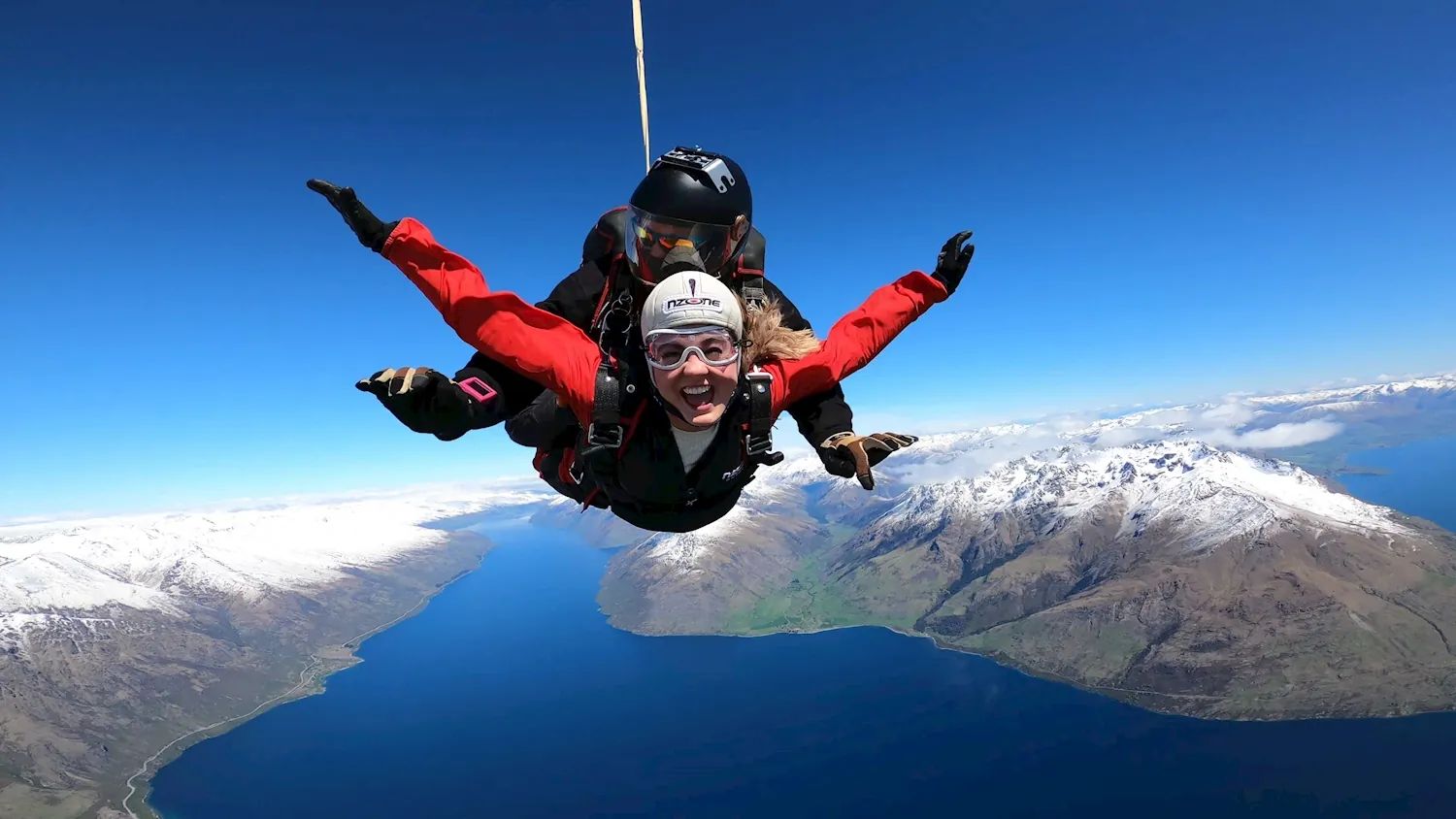
Skydiving in New Zealand is the one activity almost everyone on a backpacker route ends up doing, and the scenery is why. You are not jumping over farmland here. You're falling towards mountains, lakes, glaciers and coastline, strapped to a tandem master who does this every day.
New Zealand
3 Hours, 30 Minutes

New Zealand
3 Hours
4.9 (544 · TripAdvisor)
Up to 30 seconds of freefall at around 200km/h
$279 AUD

New Zealand
2 Hours
Three jumps are on offer: a 12,000ft tandem with a Hummer ride to the plane, a 10,000ft jump at Franz Josef with two glaciers in the frame, and the full-height 15,000ft Queenstown skydive with up to a minute of freefall.
Every tandem skydive follows the same shape. You check in, gear up and get a briefing from the crew, then climb in a small plane while the view keeps widening. At altitude the door opens, you shuffle to the edge with your tandem master, and you're out. Freefall is loud, fast and over quicker than you expect, around 200km/h with the ground doing a convincing impression of a map. Then the canopy opens, the noise stops, and you float down for a few quiet minutes over whatever New Zealand has decided to show you that day.
All gear and safety equipment is supplied on every jump. Your job is to say yes, listen to the briefing and keep your legs up on landing. Photo and video packages are paid add-ons on these jumps, and they're worth considering: nobody believes a skydive story without the footage.
Queenstown Tandem Skydive, 15,000ft, from $466. The big one: out the door at 15,000 feet, up to 60 seconds of freefall at speeds around 200km/h, over Queenstown's mountains and lakes. Allow around three and a half hours all up. Pick this if you want the longest freefall and the town famous for adrenaline to go with it.
10,000ft Tandem Skydive at Franz Josef, from $279. Thirty seconds of freefall over the Te Wahipounamu World Heritage Area, with Fox and Franz Josef Glaciers, Aoraki/Mt Cook and the Tasman Sea all visible at once. Check-in is on Cron Street in Franz Josef and the whole thing runs two to three hours. Pick this for the most dramatic view per second of freefall.
12,000ft Tandem Skydive, from $266. The classic mid-height jump with a Hummer ride out to the plane, a free buff and a certificate of completion when you land. Bookings run on minimum numbers, so leave a phone number and email when you book. Pick this for the classic mid-height jump, Hummer ride included.
Skydives are weather dependent, so book yours early in your stay at each town rather than on your last morning, and never on the same day as a bus or flight out. Operators set their own weight and age limits, check these when booking. Eat a normal breakfast, skip the alcohol the night before, and wear comfortable clothes, closed shoes and layers; it gets cold at altitude even in summer. Contact lenses are fine under the goggles provided. Leave loose jewellery and anything in your pockets at the base. If you're deciding between jumps, do the one that fits your route; the view from every one of these is the reason people come to New Zealand.
It depends on the view you want. Queenstown delivers mountains and lakes with up to 60 seconds of freefall from 15,000ft, from $466. Franz Josef puts glaciers, Aoraki/Mt Cook and the Tasman Sea in the frame from 10,000ft, from $279. Both are standard stops on a South Island route.
Roughly 30 seconds from 10,000ft and up to 60 seconds from 15,000ft, at speeds around 200km/h. The higher the exit altitude, the longer the freefall, which is the main thing you're paying extra for on the Queenstown 15,000ft jump.
None. All three jumps are tandem skydives, so you're attached to a professional tandem master who handles everything. You get a briefing before the flight and all gear and safety equipment is supplied.
Skydiving needs clear skies and manageable wind, so cancellations happen. Operators will usually reschedule you, which is why you should book the jump at the start of your time in town, not the end, and keep the next day free if you can.