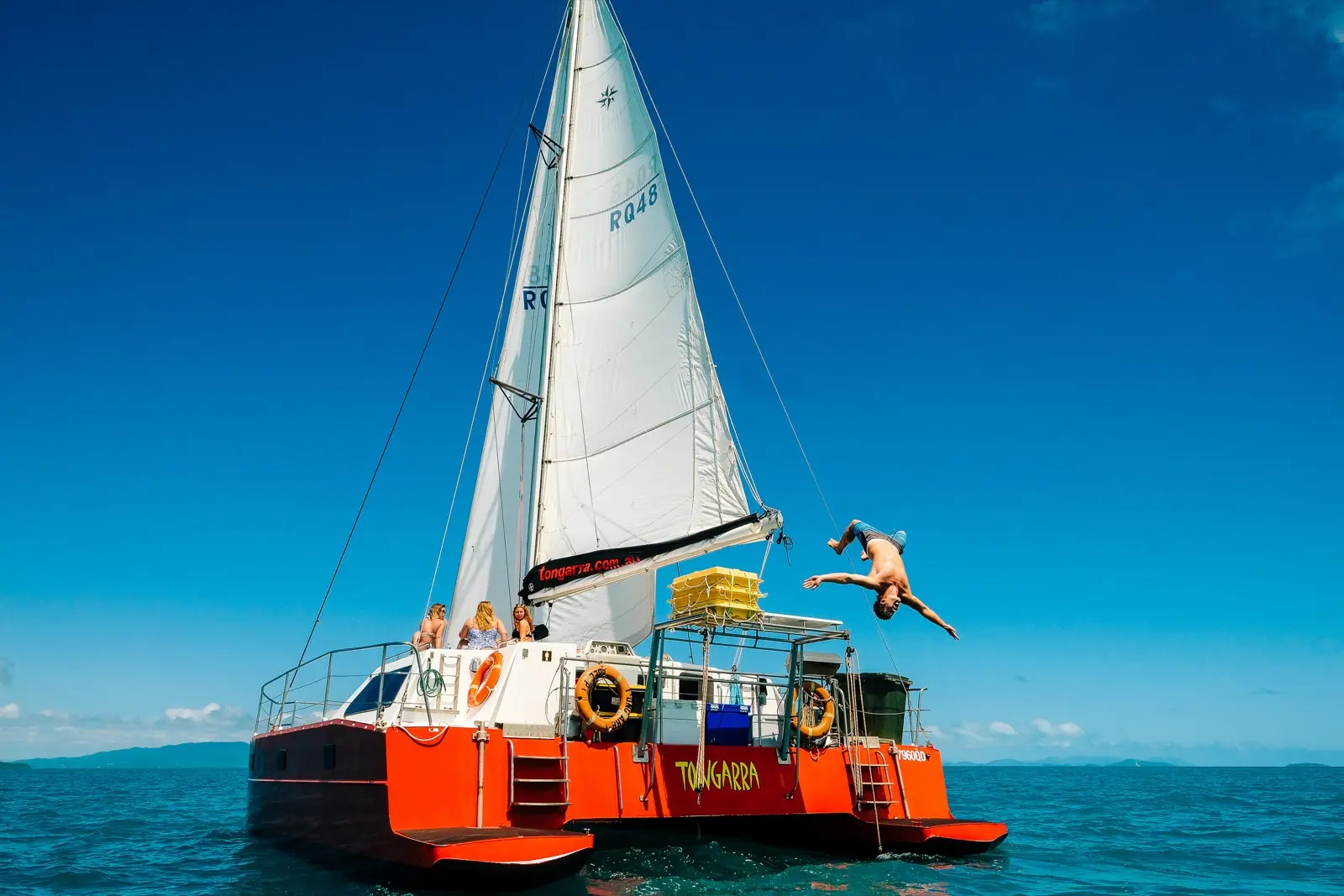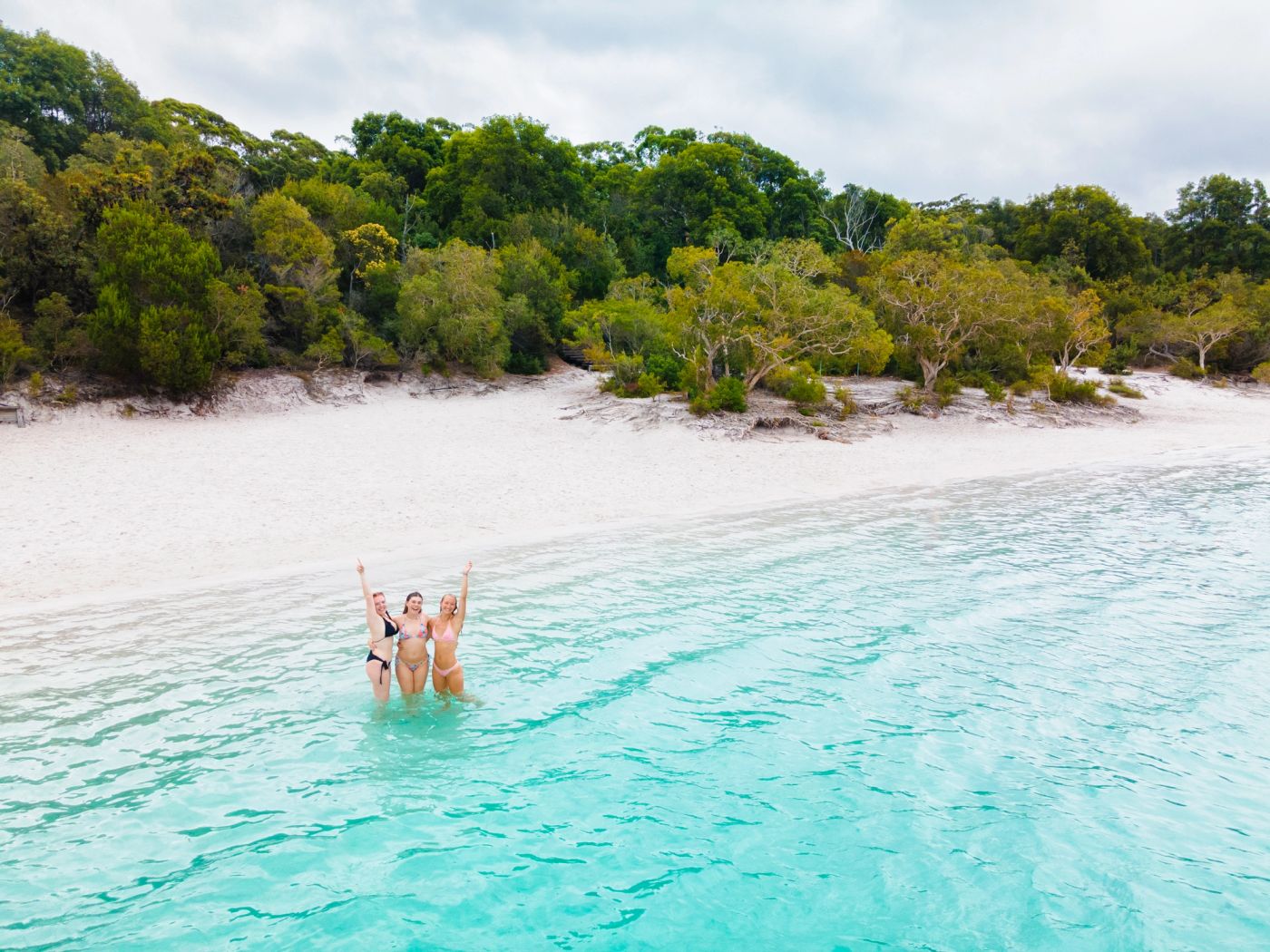
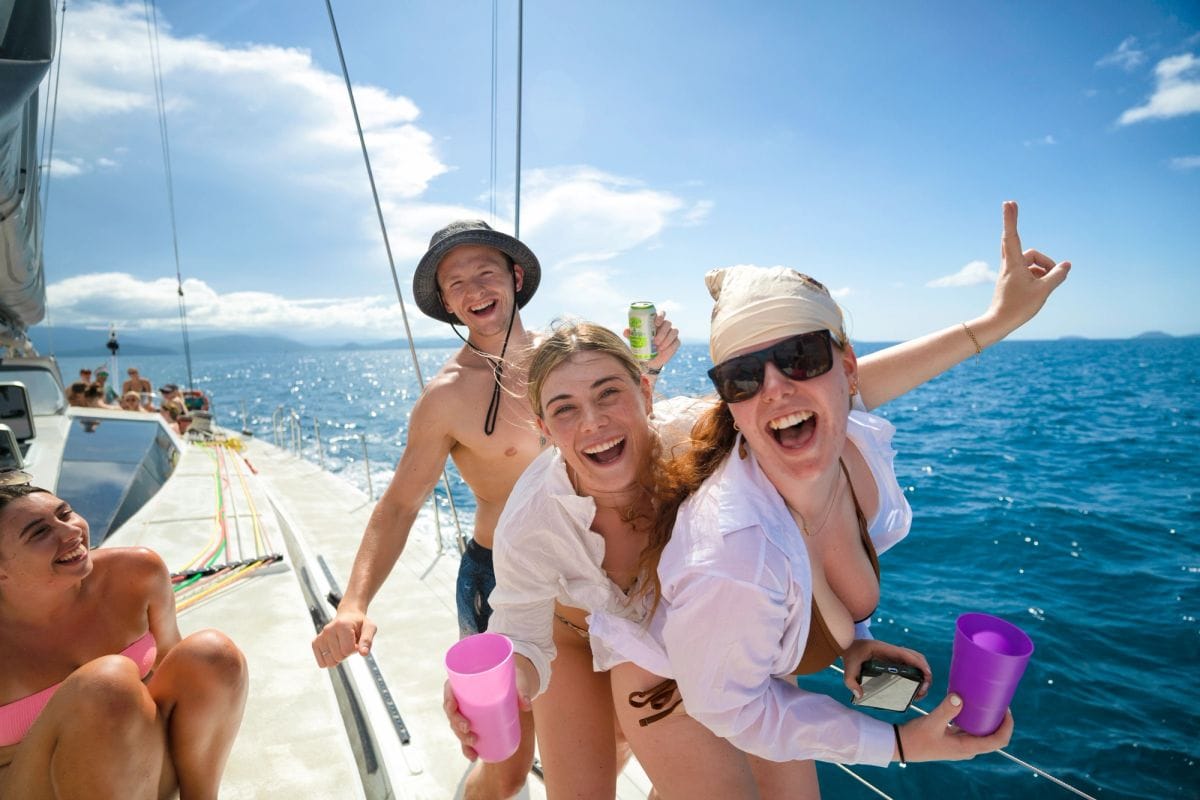


Short answer: summer in the Whitsundays (December to February) is the wet season: around 30°C, humid, with afternoon storms, the year’s heaviest rain and the cyclone season running in the background. It is also stinger season, so every snorkel is in a stinger suit, which the boats supply. The boats sail all summer, the water is at its warmest, Whitehaven Beach is still Whitehaven, and berths are easier to get than in the dry-season school holidays. Go with a spare day in your plan, and know that a day of rain on a boat is not the same as a cancelled trip. Overnight sails start from $449; day trips from $199.
Prices are per person in AUD and update from our live listings.
What summer actually looks like
The Bureau of Meteorology’s long-term averages for Hamilton Island, in the middle of the group, put January at a mean maximum of 29.9°C, a mean minimum of 24.9°C and about 293mm of rain over roughly 17 rain days. So: warm nights, warm water, and rain on more days than not, usually as a build-up through the afternoon, a storm, then clearing. December and February are similar. The sun between the storms is strong, and the humidity is the thing most people notice first.
Two bigger patterns sit behind that:
- Wet season. Roughly November or December to March or April across tropical Queensland. The heaviest rain tends to come in the later months, January to March.
- Cyclone season. Officially 1 November to 30 April, with most activity from January to March. Cyclones are the exception, not the weather; the practical effect for a traveller is that a tropical low somewhere in the Coral Sea can bring a few days of wind and swell that keep boats in port.
The best time to visit the Whitsundays runs through all twelve months; this guide is about making summer work.
Stinger season and stinger suits
Marine stingers, the box jellyfish and the much smaller Irukandji, are a tropical Queensland reality in the warmer months. Queensland’s stinger season typically runs from November to the end of May, and can start earlier or finish later. The risk is highest in that window and the advice from Surf Life Saving and the local councils is the same everywhere on the tropical coast: swim at patrolled beaches, inside stinger enclosures where they exist, and wear a stinger suit in the water.
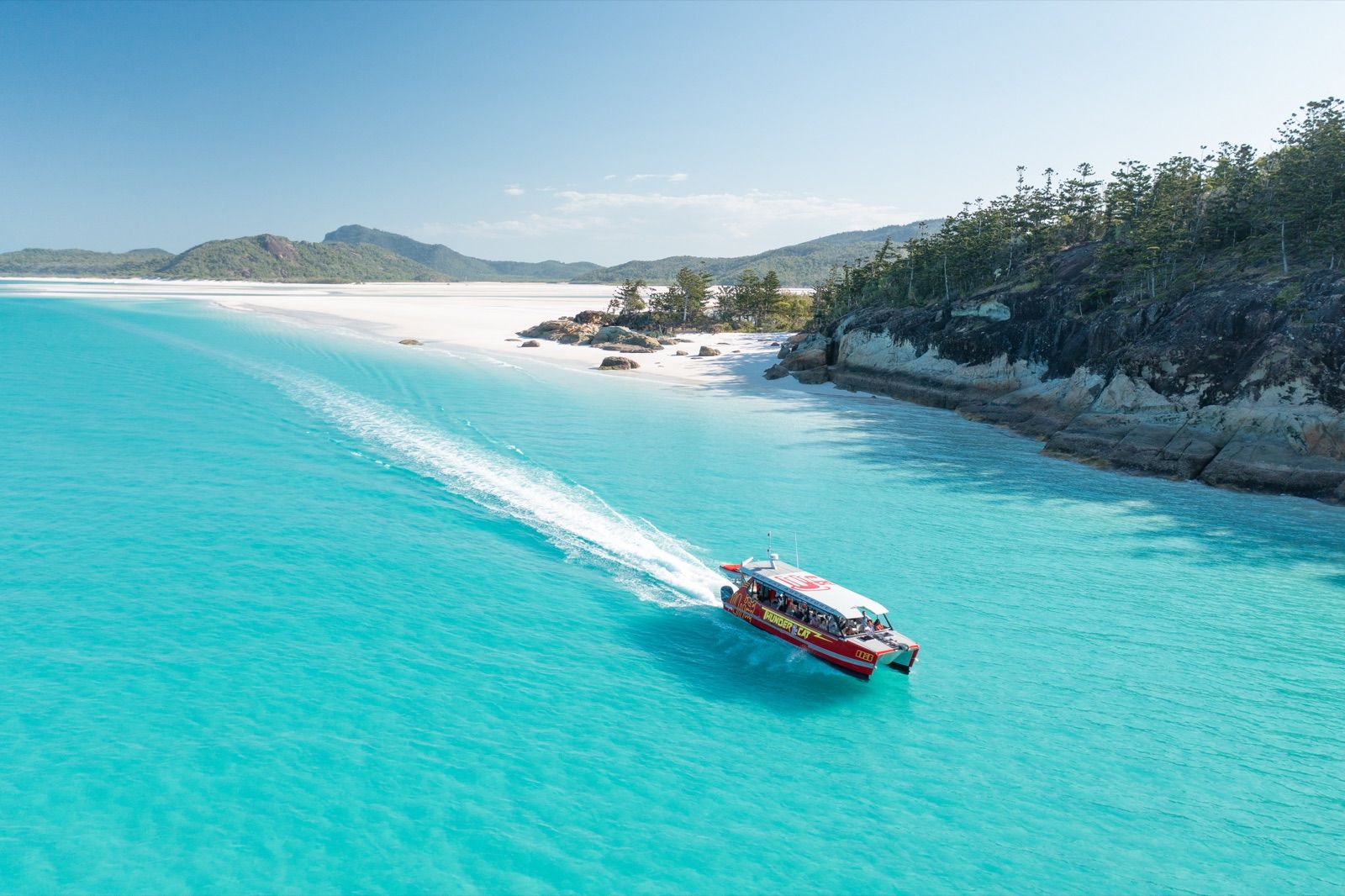
On a Whitsundays boat that is simple, because the suit comes with the trip. A stinger suit is a thin full-body lycra suit; it stops stings on the skin it covers and doubles as sun protection, which in summer matters almost as much. Among the trips we sell, the Big Fury Whitehaven Beach Day Trip lists stinger suits October to May, the Southern Lights Whitehaven day includes a sunsuit in the price, the day sail to Langford Island includes snorkel gear and stinger suits, and the overnight boats list suits as standard. Check the inclusions on the tour page and, if a suit is not listed, ask; wearing one is the norm.
Back in town, the Airlie Beach Lagoon is the swim: a free, patrolled, stinger-free lagoon on the foreshore, open year-round, with lifeguards from 5:30am to 7pm through summer. That is where Airlie swims from November to May.
Vinegar is the first aid for tropical stings and the boats carry it. Snorkelling in a suit, from a boat, with a crew that does this every day, is a managed risk, not a reason to skip the water.
What cancels, and what just gets wet
The distinction matters. Rain does not cancel a sailing trip. Wind and swell do.
A wet day on a boat means snorkelling in warm water with rain on the surface, Whitehaven under grey light (still white, still silica), and a night on deck listening to it. The crew run the same itinerary. You will not be the only one on board who came in summer; the hostels are full of people on the same plan.
A weather cancellation happens when a strong wind warning or a tropical low makes the crossing unsafe. The operator calls it, usually the day before or the morning of, and moves you to the next departure or refunds under their own terms, which are shown on the tour page and at checkout. In practice this is a few days a month at the peak of the wet, not a constant.
How to plan for it:
- Leave a spare day in Airlie Beach after your boat before any fixed onward booking, so a one-day delay does not cost you a flight or a bus leg.
- Do the boat early in your Airlie stay, not on the last possible day.
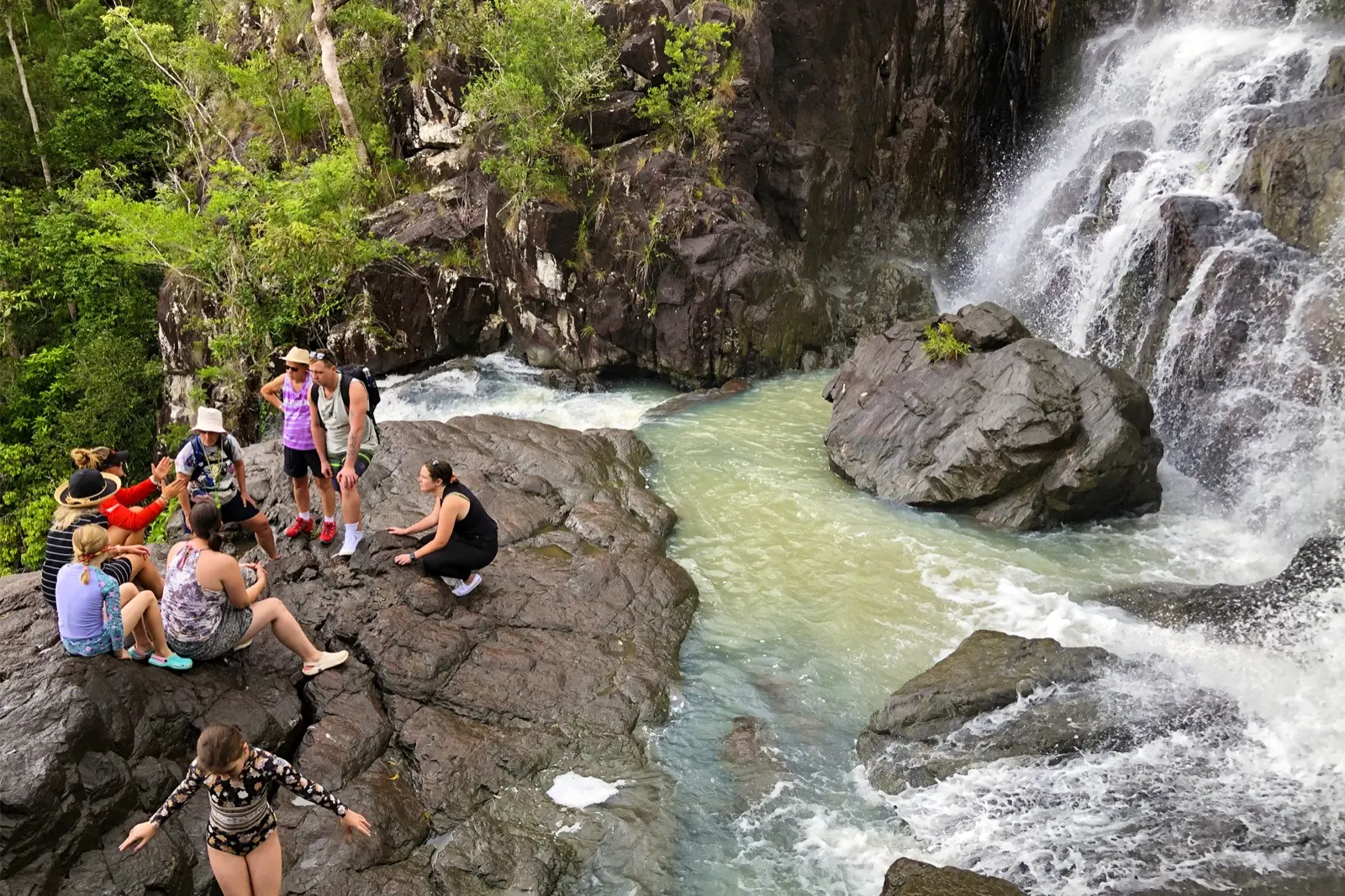
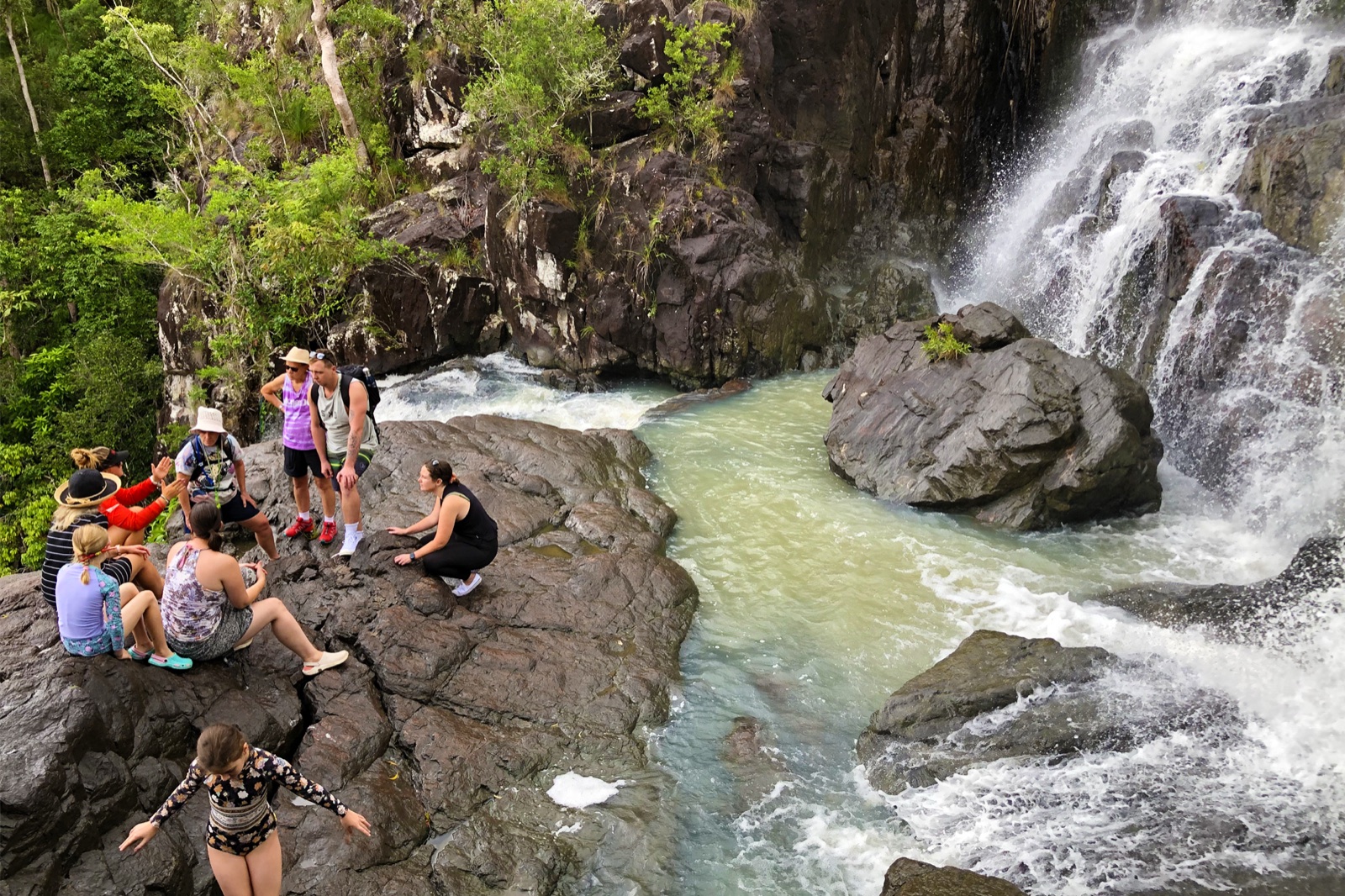
- Have an inland plan B. The Whitsundays Waterfall & Pools Day Tour, $159, swims the rock pools at Cedar Creek Falls and is back in town by 3:30pm; it runs regardless of what the sea is doing, and the falls are at their best after rain.
The tour page calendar shows the departure dates with seats, checked live, so you book a specific sailing, not a vague “sometime that week”.
Why it still works
- The water is at its warmest. Summer sea temperatures in the region sit in the high twenties, so a long snorkel in a suit is comfortable, not an endurance test.
- Green islands. The wet turns the islands from brown-gold to green, and Hill Inlet’s swirls are at their most vivid against it.
- Lighter wind than winter on many days. The dry season’s trade winds are what make sailing fast and also what make it rough; summer sits between storms with lighter, more variable wind. The day sail vs overnight guide explains what that changes on each kind of trip.
- The crowd. Christmas and New Year are the busiest weeks of the year on the East Coast, and the boats fill; the weeks either side, in early December and from mid-January to February, are quieter than the dry-season peaks.
- Prices and availability. Our boat prices are set per trip, not per season, so a summer berth costs the same as a September one. What changes is availability: the Christmas week sells out first, and February is the easiest month of the year to get the boat you want.
If your dates are flexible and you want the driest, clearest version of the Whitsundays, go between May and October. If your dates are December to February, go anyway, and go in with the right expectations.
Day trip or overnight in summer?
| Day trip | Overnight sail | |
|---|---|---|
| Weather exposure | One day, so a wet day is a wet day | Two or three days, so you usually get both |
| Cancellation impact | Easy to rebook the next day | Needs a spare day; departures are on set days |
| Stinger suit | Supplied on the boats we sell, or included in the price | Standard inclusion |
| From | $199 | $449 |
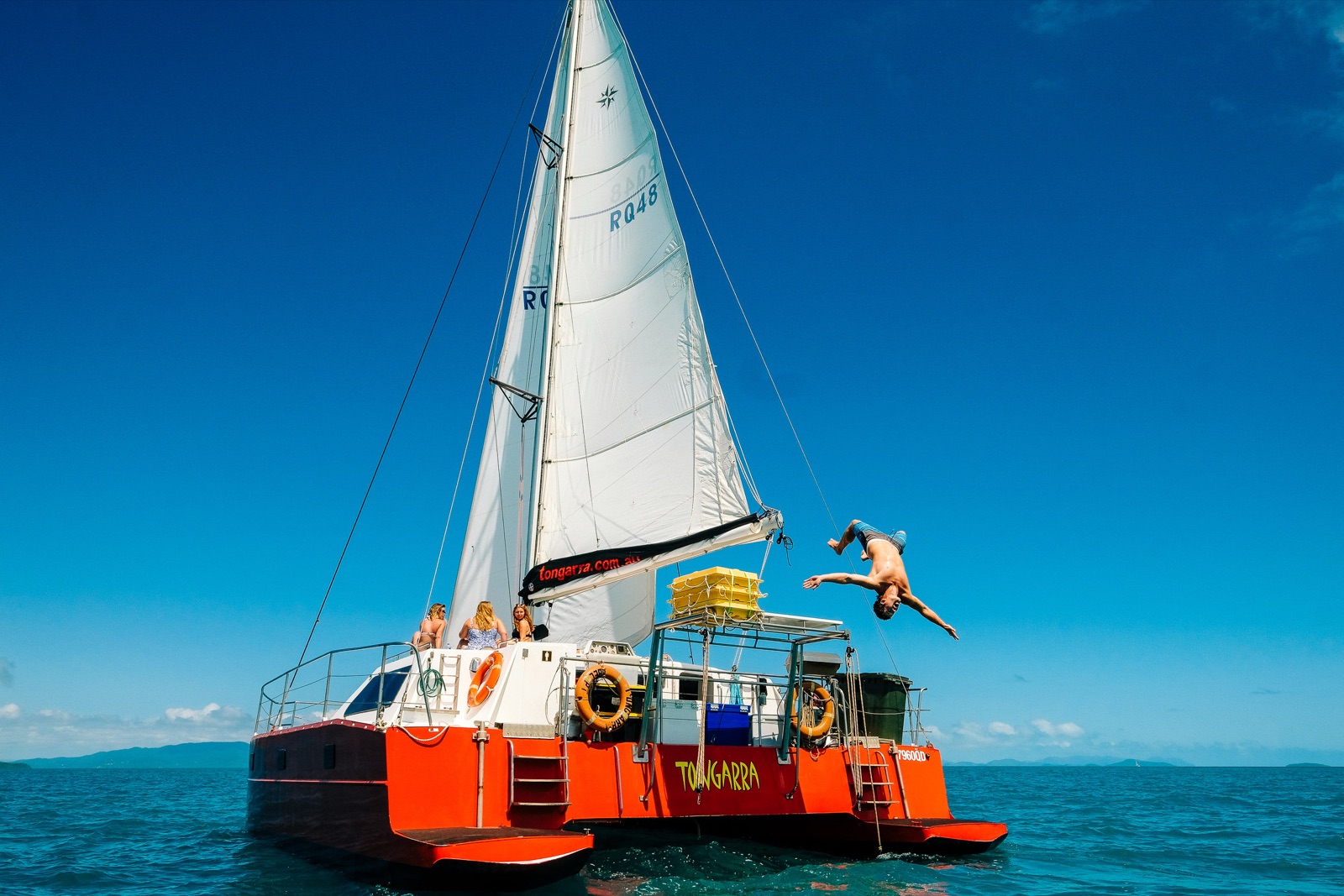
In summer the overnight sail still wins for most travellers: more water time, a night at anchor and a group you share it with. The boats compared guide sorts them by style and the price ladder sorts them by cost. If you are doing the whole coast, the K’gari + Whitsundays Combo, $1,499, pre-books a 3-day K’gari 4WD trip and 2 nights on a social boat in a fixed sequence from the start date you choose, with the beds and bus legs between them.
What to pack for a summer sail
- Reef-safe sunscreen, a hat that ties on, and sunglasses; the suit covers your body, not your face.
- A light rain jacket for deck time in a shower, and a dry bag for your phone.
- One warm layer. Even at 25°C a wet night with wind on deck feels cool.
- Insect repellent for the Airlie evenings.
- Seasickness tablets if you are unsure; the crossing to the islands can be bumpy in summer.
- Less than you think. Boats are small and your main bag stays ashore.
The East Coast packing list has the full-trip version.
FAQs
Is it worth going to the Whitsundays in December or January?
Yes if that is when you are there. Expect about 30°C, humidity, afternoon storms and stinger suits on every snorkel. The boats sail all summer, the water is at its warmest and the islands are green. Leave a spare day for weather and book the Christmas and New Year week early.
Do you have to wear a stinger suit in the Whitsundays in summer?
Yes, on every snorkel from roughly November to May. The boats we sell supply suits or include them in the price. The suit also works as sun protection, which matters in summer.
Do Whitsundays sailing trips get cancelled in the wet season?
Occasionally, for wind or swell rather than rain. A rainy day sails as normal; a strong wind warning or tropical low keeps boats in port, and the operator moves you to the next departure or refunds under their own terms. Plan a spare day in Airlie Beach after your boat.
How much rain does the Whitsundays get in summer?
Hamilton Island averages about 293mm in January over roughly 17 rain days, with similar figures for December and February, mostly as afternoon storms rather than all-day rain. The mean maximum is 29.9°C and the mean minimum 24.9°C.
When is cyclone season in the Whitsundays?
The Australian tropical cyclone season officially runs from 1 November to 30 April, with most activity from January to March. A cyclone is the exception; the usual effect of a tropical low is a few days of wind that delay boats.
Where can you swim in Airlie Beach during stinger season?
The Airlie Beach Lagoon: free, patrolled, stinger-free and open year-round, on the foreshore in the middle of town.
Is the Whitsundays cheaper in summer?
Our boat prices are the same all year; what changes is availability. The Christmas and New Year week sells out first; early December and mid-January to February are the easiest times to get the boat you want. Compare every boat on Whitsundays sailing trips by price.
Day trip or overnight sail in summer?
Overnight for most people: more time on the water and a group to share it with, from $449. A day trip from $199 is easier to rebook if a weather day lands on your date.
Tagged