

Short answer: the best time to visit the Whitsundays is the dry season, roughly May to October, when the air is cooler, the rain mostly stays away and the water is clearest. Within that window, late August to October is the sweet spot: trade winds easing, whales still around and the water warming up before stinger season. Every month is sailable though, and the boats run all year.
Prices are per person in AUD, from our current listings (October 2026), and can change.
Dry season vs wet season
The Whitsundays sit in the tropics, so the year splits in two rather than four.
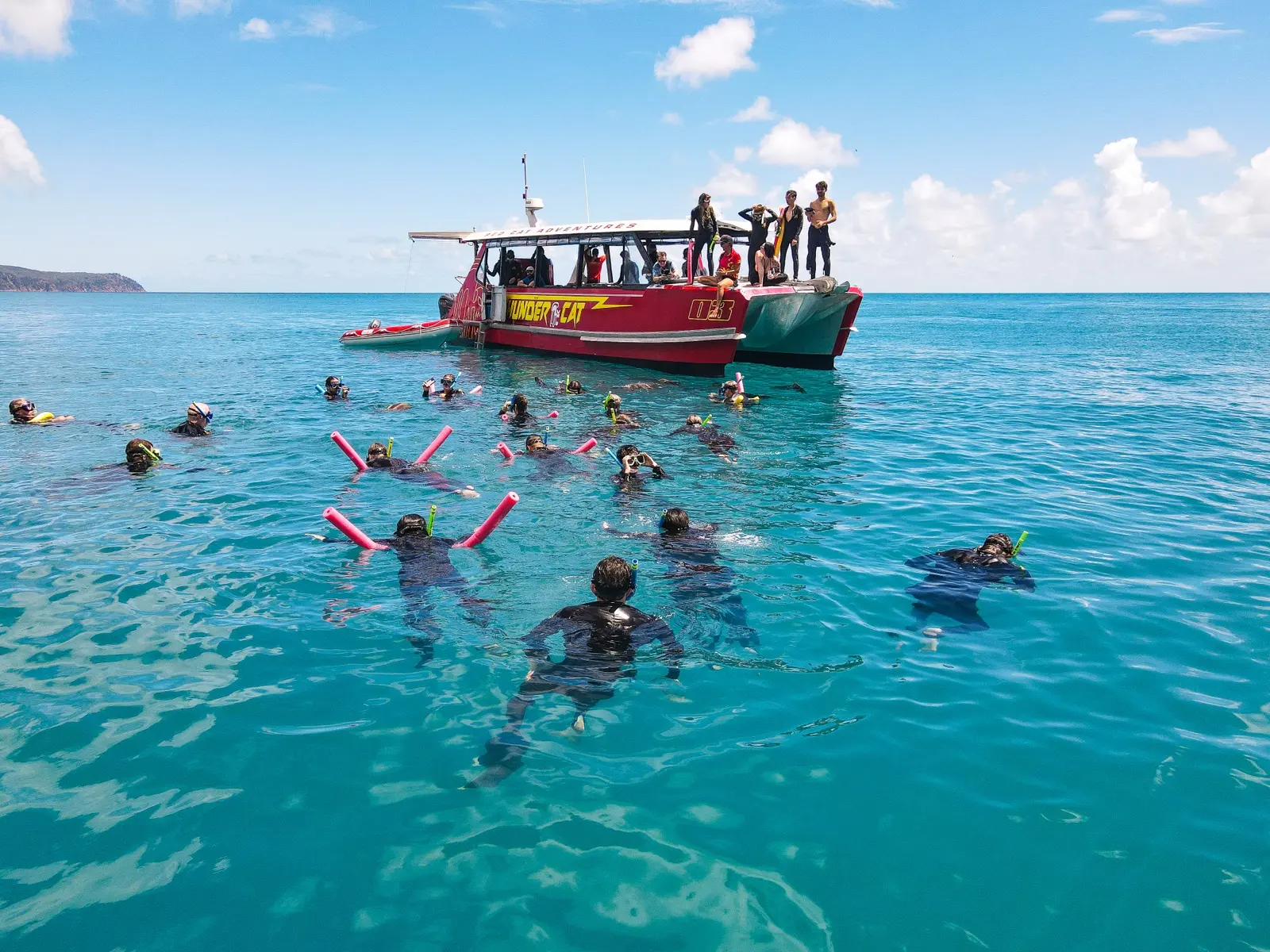
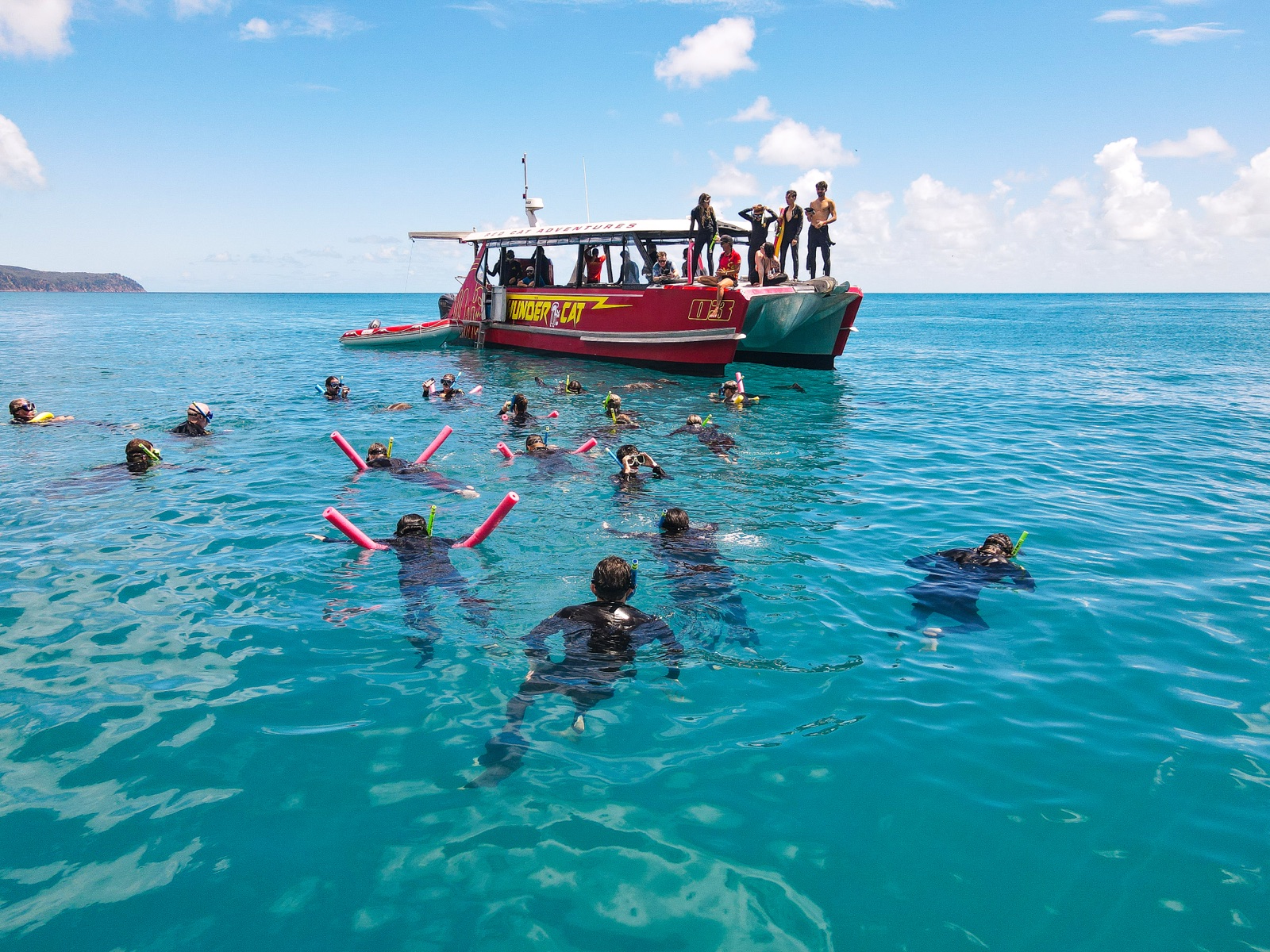
Dry season (roughly May to October). Lower humidity, mild days, cool nights, and the long clear spells that make Whitehaven Beach look the way it does in photos. This is winter, and winter here means you still swim, but the water is at its coolest around June to August and a wetsuit is welcome on snorkel stops. Some day boats charge extra for wetsuit hire in the winter months, which tells you something.
Wet season (roughly November to April). Hot, humid, with afternoon storms and the heaviest rain usually in the later months. The water is warm, the islands are green and it is quieter outside the Christmas rush. The trade-offs: rain can wash out a day, run-off can cloud the inshore water after big storms, and this is cyclone season, so boats occasionally cancel for weather. If you travel in the wet, build in a spare day.
Stinger season and stinger suits
Marine stingers (box jellyfish and the much smaller Irukandji) are a tropical Queensland reality in the warmer months, roughly October or November through to May. Every reputable boat issues stinger suits in that window and you wear one for every snorkel. Among our listings, the Big Fury Whitehaven Beach Day Trip states stinger suits October to May, and overnight boats like Blizzard Whitsundays Sailing 3D/2N, Atlantic Clipper and British Defender, 3 Days, 2 Nights list stinger suits as standard inclusions.
Does stinger season mean don’t go? No. It means wear the suit, which you will be handed anyway. The suit also doubles as sun protection, which matters more than most people expect out here.
Wind, and why it matters for sailing
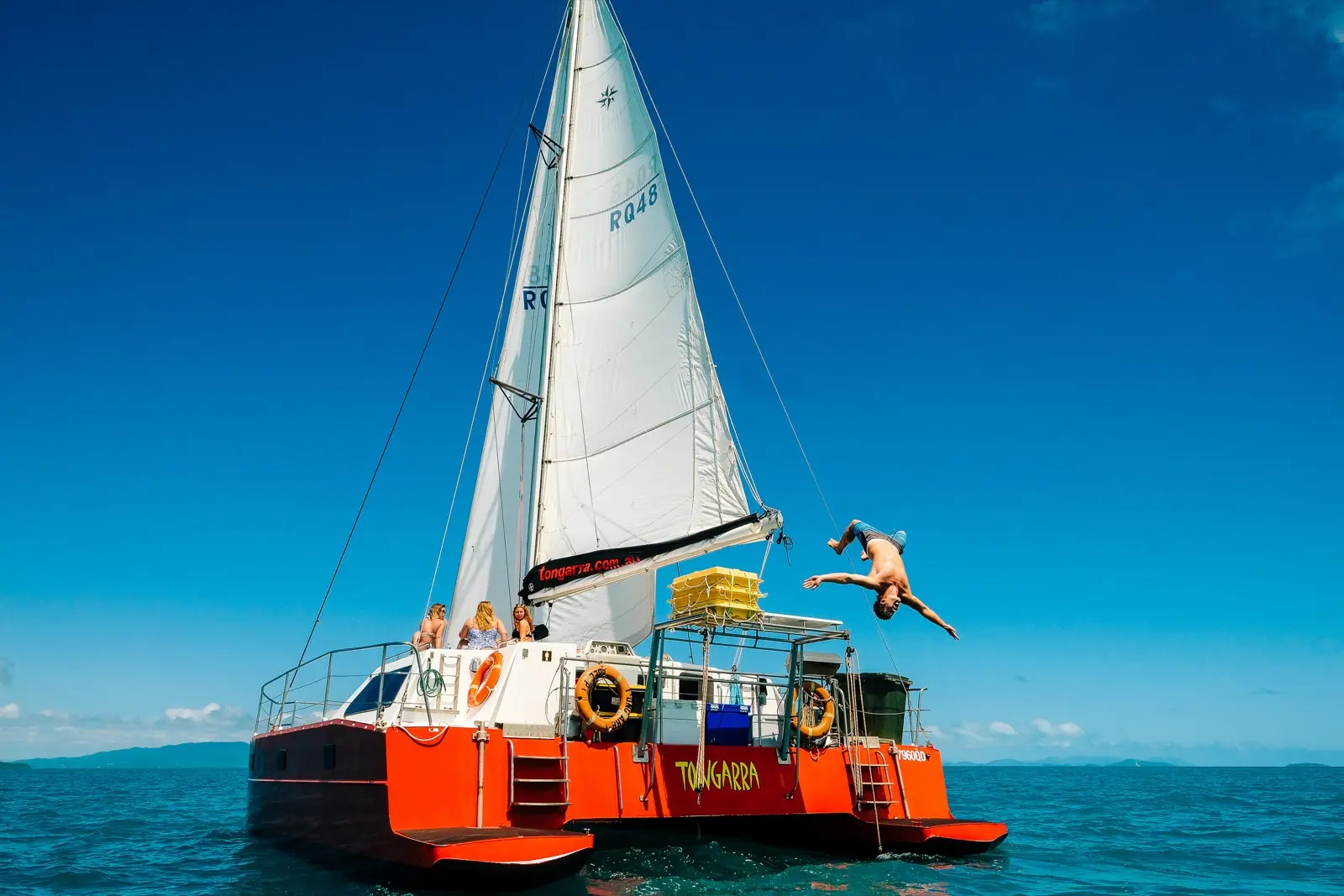
The south-east trade winds blow hardest through the winter months, roughly June to August. That is good news if you want to sail, properly sail, on a maxi like Hammer Maxi Sailing, 2 Days, 2 Nights in the Whitsundays or Apollo Whitsundays Sailing 3D/2N. It is less good news for your stomach. Spring tends to bring lighter winds and flatter water, which is why late August to October is the compromise most people land on: still dry, calmer, and the water warming up.
In lighter conditions, boats motor more and sail less. If the point of your trip is hoisting sails, winter wind is your friend. If the point is snorkelling and sunbaking on Whitehaven, lighter is better. Whitsundays sailing boats compared breaks down which boats are built for which.
Whale season
Humpback whales pass through the Whitsundays on their migration, and the boats that mention it put the window at July to September. New Horizon Whitsundays Sailing 2 Days lists whales in season (July to September), and the Airlie Adventure Jetski Tour says whales are possible July to September. Nothing in the Whitsundays is sold as a whale-watching tour, so treat a sighting as a bonus. If whales are the point, read our whale watching season guide for the tours built around them.
School holidays and crowds
Airlie Beach fills up during Australian school holidays: Easter, the late June to July break, late September to early October and the long December to January summer holidays. Boats book out weeks ahead in those windows and hostels follow. Christmas and New Year land in the hot, wet, stinger half of the year and are still the busiest time, which says more about holidays than weather. If you can travel outside those blocks, May, early June, August and November are quieter.
Month by month, roughly
| Months | Weather | Water | Stingers | Wind | Verdict |
|---|---|---|---|---|---|
| May to June | Dry, cooling | Coolest, clear | Season ending | Trade winds building | Good, quiet |
| July to August | Dry, mild days, cool nights | Cool, wetsuit welcome | Low | Strongest, best sailing | Good, book ahead for July holidays |
| September to October | Dry, warming | Warming, clear | Season starting late Oct | Easing | Best overall |
| November to December | Hot, humid, storms starting | Warm | Suits on | Light | Fine, watch forecasts |
| January to March | Hottest, wettest | Warm, can be cloudy inshore | Suits on | Light, cyclone risk | Riskiest, spare day needed |
| April | Drying out | Warm | Suits on | Light to moderate | Underrated |
Which trip for which season
Day trips (any month)
A day trip is the least weather-exposed way to see the islands because you are only committing one day. The Whitsundays Day Sail, Langford Sandbar & Snorkel (from $199, ages 12+) runs daily to the quieter side of the islands rather than Whitehaven: a fringing-reef snorkel, lunch on deck, then about two hours on Langford Island’s sandbar with the resident turtles, and a sunset sail home around 6 to 6:30pm. Morning tea, lunch, afternoon snacks, snorkel gear and stinger suits are included; alcohol is BYO.
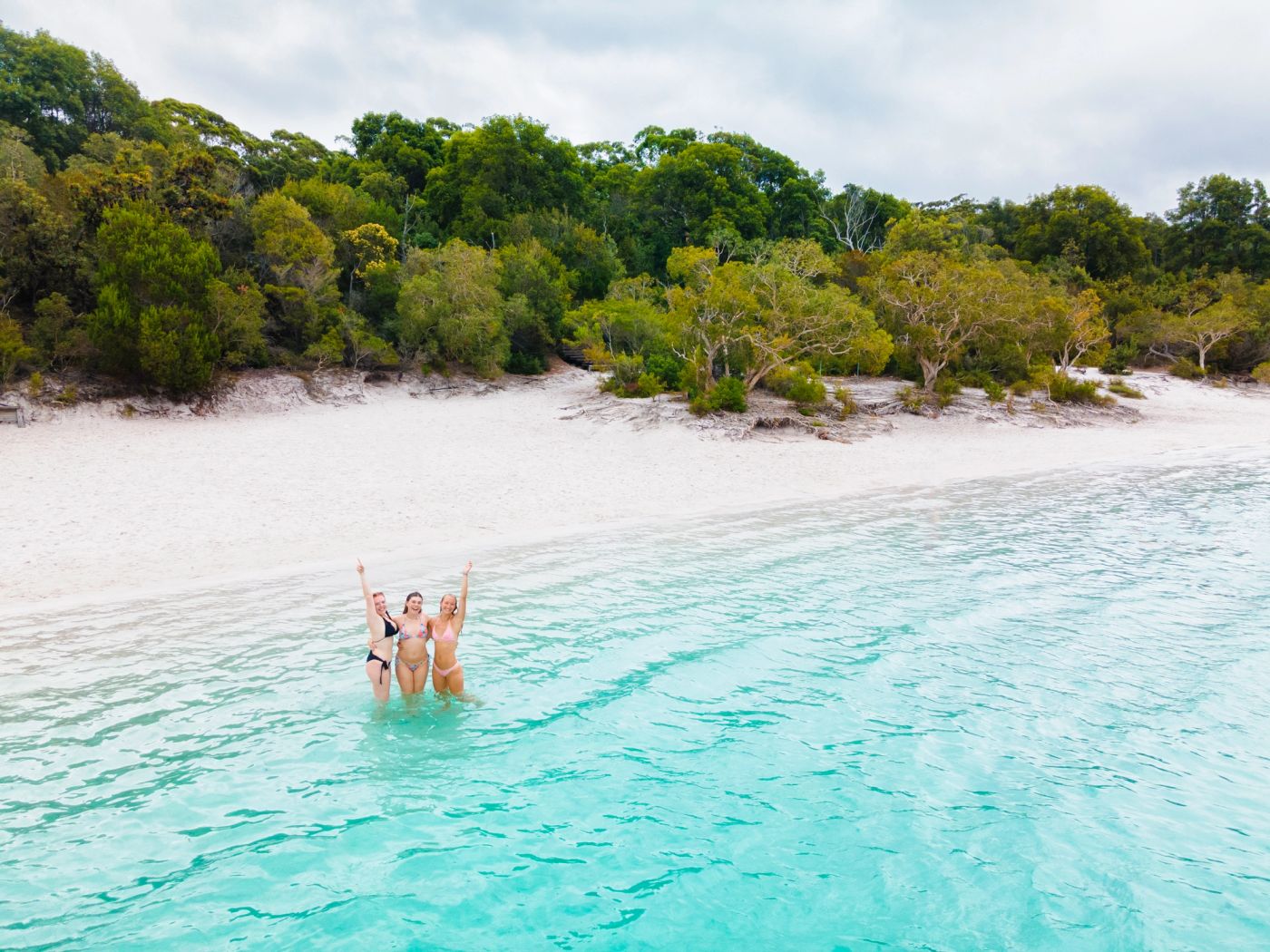
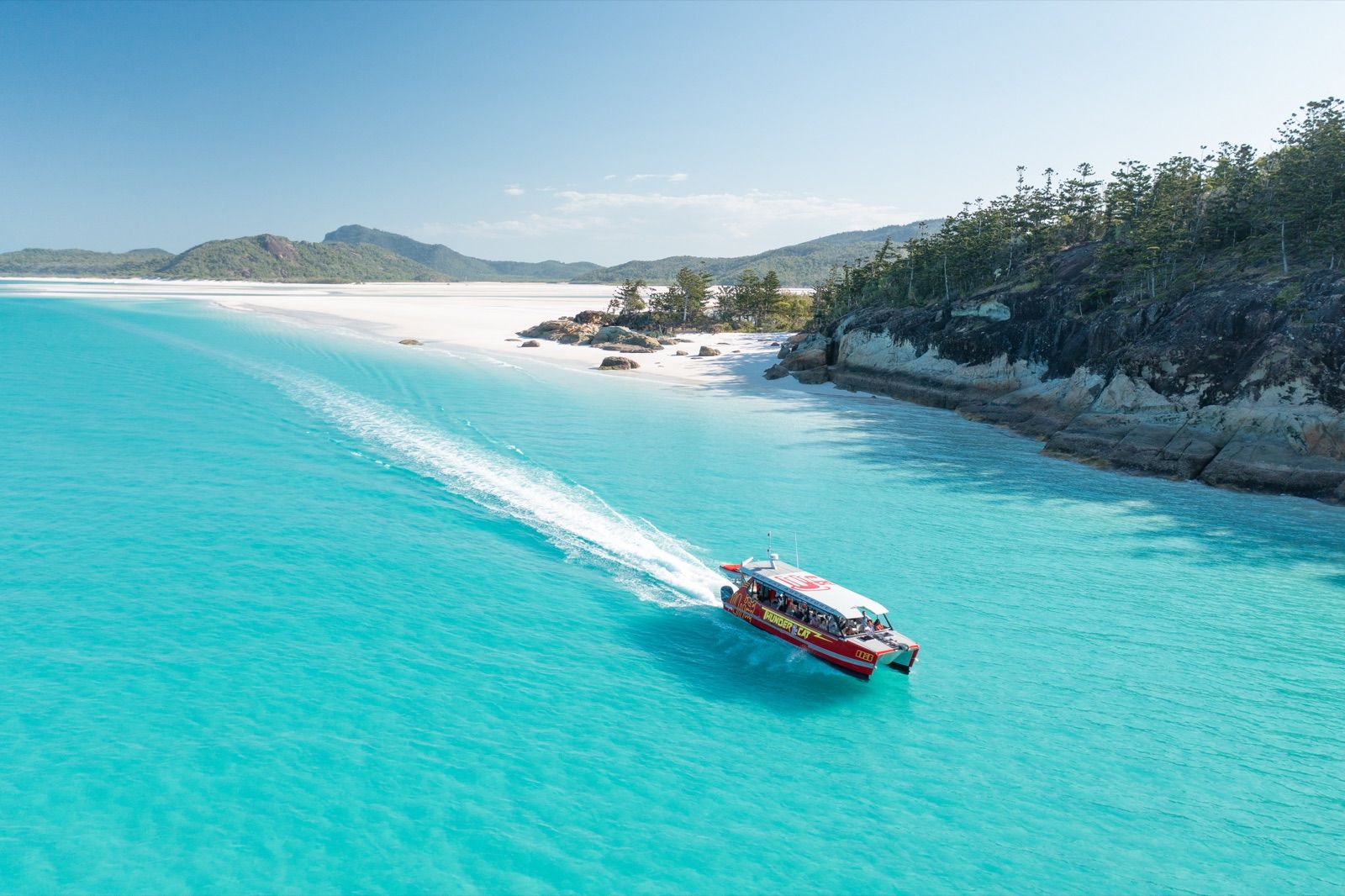
If Hill Inlet is the photo you came for, the Whitsundays Speed Boat Day Tour, Whitehaven Express (from $249) covers Whitehaven, the Hill Inlet lookout and two snorkel stops, 9am to about 5pm on a fast, stable catamaran, with stinger suits, meals and free bus transfers included. The Big Fury Whitehaven Beach Day Trip (from $239, 7 hours) adds a buffet picnic lunch served on Whitehaven and Airlie transfers. Camira Sailing Adventure departing Port of Airlie (from $279, up to 72) is the big sailing catamaran option with lunch and beer and wine from 10am.
Our day sail vs overnight guide covers the trade-off in detail, and the Whitehaven Beach and Hill Inlet guide explains the tide timing that makes or breaks the lookout. To compare boats and dates, see today’s cheapest Whitsundays sailing prices.
Overnight sailing (best in the dry)
Two days and a night out among the islands is the classic, and it is best in the dry season simply because you are sleeping on deck or in a cabin and weather matters more. Habibi 2 Day 1 Night Whitsunday Sailing (from $449) is the entry point, with private cabins for everyone, two to three snorkel stops and all meals. Prima Whitsundays Adventure Sailing, 2 Days 1 Night (from $579, 6 to 12 guests) is the small-group version.
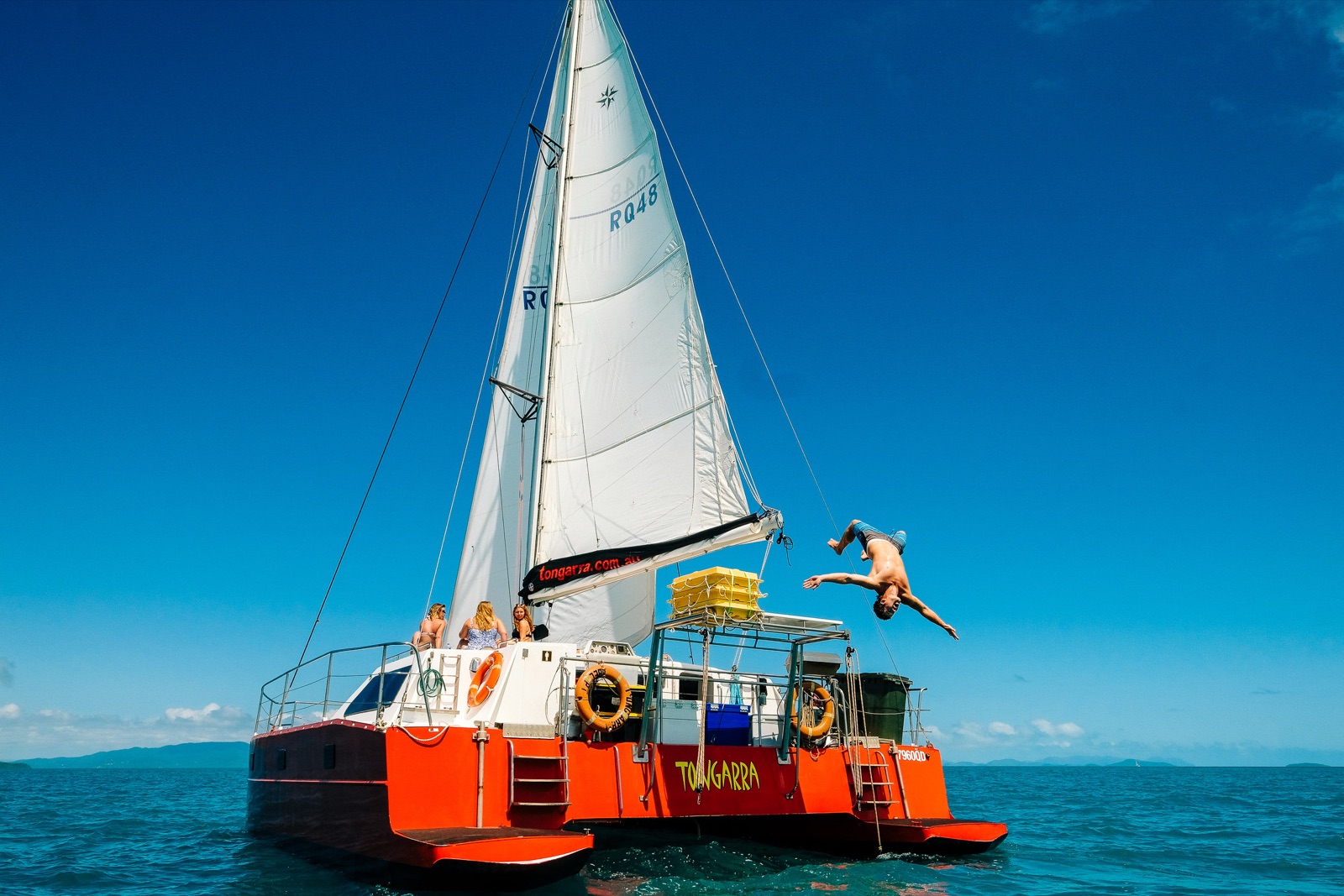
For two nights, Spank Me Whitsundays Sailing 2 Days 2 Nights (from $639) and Atlantic Clipper (from $689, 18+) are the social boats; the Clipper has a 12-person hot spa and an eight-metre waterslide, which earns its keep in winter. Blizzard Whitsundays Sailing 3D/2N (from $689 up to 10) and O-Nice Whitsundays Sailing Catamaran 2 Days (from $739, up to 9) are the relaxed, private-ensuite choices. Prices and what you get for them are laid out in how much does Whitsundays sailing cost.
Wet-weather and wind backups
If the forecast turns, the Whitsundays Waterfall & Pools Day Tour (from $159) heads inland instead: a swim and guided eco walk at Cedar Creek Falls, which rain improves rather than ruins, then lunch and a drink at a waterfront beach bar, back in Airlie by 3:30pm. The 60 Min Scenic Flight, Whitehaven & Heart Reef (from $339, guaranteed window seat) is the one way to see Hill Inlet’s swirl and Heart Reef without a boat, and it needs clear skies rather than calm seas.
The short version
Go between late August and October if you can choose. Go in the dry season (May to October) if you can’t be that precise. Go whenever you like if your dates are fixed; just wear the stinger suit from November to May, pack a wetsuit-friendly attitude in July, and keep a spare day in the wet. Our East Coast packing guide covers what to bring for a sail.
FAQs
What is the best month to visit the Whitsundays? September or October: dry, warming, lighter wind than mid-winter, and before stinger season properly starts. August is a close second if you want whales.
Can you swim in the Whitsundays in stinger season? Yes, in a stinger suit, which the boats provide and which you wear for every snorkel from roughly November to May.
Is it too cold to snorkel in winter? No, but the water is at its coolest around June to August. Many boats include wetsuits or stinger suits; some day boats charge extra for wetsuit hire in winter, so check the inclusions on the tour page.
Does it rain a lot in the Whitsundays? In the wet season (roughly November to April), yes, usually as afternoon storms and heavy spells in the later months. The dry season is reliably clearer. Boats can cancel for weather in the wet, so leave a spare day.
When are the Whitsundays busiest? Australian school holidays, especially the December to January block and the late June to July break. Book overnight boats well ahead for those dates.
Do I need to book a day trip or an overnight? A day trip from $239 gets you Whitehaven and a snorkel in one hit. Overnight from $449 gets you Hill Inlet, more snorkel sites and a night anchored among the islands. If you have two days spare in the dry season, overnight wins.
Tagged